WordCamp Atlanta 2013: a look back
I had a great time talking about advanced content strategy at WordCamp Atlanta last week. My thanks to the organizers and the volunteers for all their hard work.
My audience provided both great questions and answers during “How to Win Awards and Influence Readers in 439 Days and 668 Posts.” In addition, they shared informative and kind tweets throughout the session.
http://twitter.com/clear_mirror/status/312569567929053184
http://twitter.com/Minkado/status/312571009729454081
http://twitter.com/clear_mirror/status/312576238097158144
• • •
I’d love to help your audience, too.
Tell me about your upcoming conference, seminar, webinar or workshop.

If you came to my session at WordCamp Atlanta 2013, “How to Win Awards and Influence Readers in 439 Days and 668 Posts,” thank you. If you’re just interested in advanced content marketing for business, you’re in the right place.
1. You can see the slides from the presentation. Please feel free to download them or embed them on your site. To download a PDF, click “View on SlideShare,” then “Download.”
•
2. I’ll have video posted soon. See the video of the presentation.
3. If you want to stay in touch …
- You can contact me through this simple form. Please feel free to ask questions, make suggestions or request help.
- You can follow me on Twitter at @WadeOnTweets.
- You can subscribe to the free e-mail newsletter with tips, info, specials and more.
- And you can subscribe to my Birmingham Blogging Academy posts by RSS feed or by e-mail by looking for the box in the right sidebar.
Thanks for checking out “How to Win Awards and Influence Readers in 439 Days and 668 Posts.”
• • •
If you need help with communication,
book me for a FREE consultation.
Social media and volunteerism: How to change the world
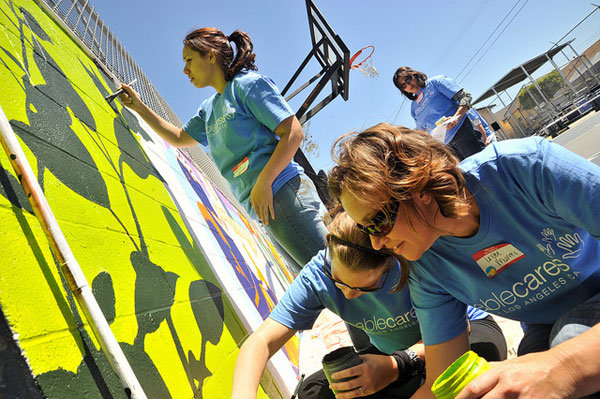
Volunteerism is near and dear to me. I’ve helped numerous causes over the years through donations, fund-raising, recruitment and service projects.
Last week, I spoke to the Vestavia Hills Sunrise Rotary Club about using social media to further your cause.
The first step is to connect with people online, even complete strangers. I find Twitter to be especially useful in this regard, but many social media channels will do fine. Making meaningful connections builds a great network.
I ask people about their thoughts on issues, their work and other things. And I answer questions, too. I’m not selling all the time, but mostly listening.
The second step is to believe that each of us can make a difference. Otherwise, what is the point of service or using social media to expand it?
It is easy to point out problems. Most of us do it unsolicited. It it much more challenging to find a solution and do it. Otherwise, every single one of us would be fit and happy and working in our dream jobs.
That’s why I admire volunteers so much: They work very hard to make their corner of the world a better place. I spend my free time building the Alabama Social Media Association into a sustainable organization for educating others in social media.
The third step is to participate regularly in social media and with intent. Being thoughtful in what you share and who you follow in your channels will make this much easier.
Regular participation builds your understanding of the community, including where help is needed and who can help. Being able to connect the two is basic service.
Many nonprofit groups help where they see need in the community. But sometimes, they see only problems brought to them. Members of a cause who have deeper ties to the community can find even more opportunities to help others, especially those who are unaware of such resources nearby.
I have connected with friends on social media who have given me insights into Birmingham’s challenges of illiteracy, diabetes, food deserts, education, cancer, unwanted pets and homelessness. Knowing more helps me to contribute in appropriate ways.
By building a network through social media, we find others who can help with our causes. Alone, we can change little things. Together, we can change the world.
- Recap of my talk on the Vestavia Hills Sunrise Rotary Club blog
Photo: The Cable Show (CC)
• • •
I share more ways to use social media in my weekly newsletter.
It’s free, so subscribe today.

Speaking gigs: WordCamp Atlanta, March 2013

WordCamp Atlanta: This time, I’ll be in front of the audience.
WordCamp Atlanta 2013 is just 3 short weeks away, and tickets are nearly gone.
 I hope you get one today, because I want to see you there for my kickoff presentation, “How to Win Awards and Influence Readers in 439 Days and 668 Posts.” It’s my first time to speak at WordCamp Atlanta since 2010.
My talk on advanced content management and marketing will help you delve deep into the biggest trend of the year. Forget selling: Reach out to fans and customers through shared interests. Be the storyteller for your brand and win over the right crowd.
The official description:
Birmingham’s Best Blogger Wade Kwon reveals the secrets to developing a content strategy. It’s a plan that took an unknown site from just another URL to the Best Website of 2011, according to readers of the Birmingham News.
This session is for intermediate and advanced users, business owners and publishers who want to not only blog more often, but more effectively and with a defined return on investment.
The sooner you develop a plan, the sooner you can slowly win over a dynamic, interactive, engaged audience.
My session will be at 10 a.m. EDT March 15.
WordCamp Atlanta runs March 15-16 at the Loudermilk Center. Tickets are $40 for the full 2 days and can be purchased online.
I’ll see you there!
•
Also …
WordCamp Atlanta 2012 Pinterest board
Photo: Judi Knight (CC)
• • •
Need a speaker for your conference?
I can give interactive presentations on a number of topics.
Taking on a new role at our nonprofit organization

I have served various causes over the years. Some made me happy, some wore me plumb out.
We are starting on Year 3 of the Alabama Social Media Association, and I like to brag (or threaten) to people: I can talk to you for hours about our humble nonprofit organization.
For the past 2 years, I have served as chair of the finance committee. Our main task has been to find sponsors for our educational and social events.
This year, I have the privilege of serving as chairman of the board. I am here to guide our newest board members and continue our efforts in holding events, recruiting volunteers and keeping the ship on course.
It is an honor I take seriously, as this group is near and dear to my heart. My unswerving goal aligns perfectly with the organization’s goal: to educate people in social media. As a Boy Scout growing up, I’ve been trained to leave something better than I found it. We are getting there.
To that end, I believe lessons from the first 2 years will help us continue to build ALsocme into a sustainable and thriving group that expands beyond its Birmingham borders.
1. Communicate intent. This applies to letting stakeholders — internal and external — know what’s happening and what’s next. It seems straightforward, but I have seen volunteer groups (including this one) stumble in keeping people apprised of updates, setbacks and accomplishments.
We must agree to overcommunicate and overshare.
2. Hold people accountable, including yourself. Rightly or wrongly, I have almost always taken failures personally. What could have I done differently? What could I change for next time? I am far from perfect, and my reigning fault is holding people to very high standards. I will work on this. A lot.
But I also aim to help my colleagues set up projects, break them down into tasks and deadlines, and keep them pushing forward.
3. Find the right people for the right roles. One of our earliest decisions as a new board of directors was what to do first. I had suggested we spend time finding more volunteers to fill specific roles: court sponsors, write media releases, coordinate with partners, locate event venues and a dozen more tasks.
Alabama coach Nick Saban puts personnel first in the Process. He recruits nonstop to find the most talented person for each position, whether on the offense, the defense or the coaching staff. We as board members and committee chairs are recruiting nonstop, talking with many potential volunteers and working hard on filling out our roster.
4. Maintain continuity of service. We had a gap of 8 months of events and service. I share in the blame, but I promise that will not be the case going forward.
ALsocme is a group that serves the public. We cannot serve our friends and neighbors by sitting around. Our members have been patient and kind, as have our sponsors and partners. But we have failed them by not fulfilling our promise to educate people in social media.
If we are truly to shine by example, we must continue to bring great speakers and sponsors to our audience. We must show loving hospitality and timely responses as well. We must do so in a transparent and authentic manner. Always.
Our goals are lofty, but through a diverse and well-coordinated team, we can accomplish them and more. I share these lessons, because they might also apply to your service group or your startup or your employer or your company.
I think of my role at the Alabama Social Media Association as my other full-time job. No pay, but the benefits are fantastic.
Photo: Arik Sokol
•
- My letter to the organization from January
- Check out ALsocme.com for updates, our free newsletter and more.
• • •
Hundreds rely on my free weekly newsletter for
tips, ideas and strategy in social media and more.
Meet me at Cantina on Friday
I’m excited to be host of this month’s Alabama Bloggers luncheon.
We’re meeting from 11:30 a.m. to 1 p.m. Friday at Cantina at Pepper Place in Birmingham’s Lakeview district. Everyone’s invited and can RSVP on the original post.

At the first Alabama Bloggers meetup in 2009,
I brought the “I ❤ blogging” buttons, not the girl.
I’ve been haunting these meetups for 4 years and have been known to bring a surprise or two. This time, we’re giving away two $25 gift cards from Cantina, so make sure to read the post top to bottom to enter.
I love meeting other bloggers in Birmingham and hearing more about what they do online and offline. For this week’s event, we’ll discuss building a community.
A few questions we might tackle:
- How important is it for bloggers to listen to commenters?
- How important is it for bloggers to respond and interact with commenters?
- What is an online community? Who runs it, if anyone?
- What do bloggers get out of a community? What do members get?
- What are some ways to build a community around a blog?
- What are the most common headaches in managing a community? And how do we deal with them?
(Add your questions about blog communities in the comments.)
Don’t miss a lively discussion, great food and smiles all around on Friday. RSVP today.
• • •
Looking to build an online community with your business?
Let me help.
Case study: 11,000+ Facebook Shares for chickens in sweaters

Behold our fowl-weather friends.
A pair of chickens, Papoo and Chalmers, sport colorful sweaters while braving a snowy back yard. Birmingham market Freshfully shared the photo of them on its page, quickly racking up more than 11,000 Shares, close to 1,400 Likes and hundreds of comments. [Note: Freshfully is one of my clients.]
It’s not often that average barnyard animals — even nattily dressed ones — go viral.
Their owner, Kim DeBord, is an artist in Ann Arbor, Mich. She and her husband Zach bought the hens in the summer of 2007 while living in Chicago, collecting eggs daily.
“My mother, Mary Jackson, usually knits someone in the family something for Christmas,” Kim said via email. “She made these little capes just as a joke. She followed no pattern, just made it up as she went.
“The chickens only wore the sweaters long enough for photos and a good laugh.”
Kim shared the photos in a January 2008 post, “New Year, Same Chicken,” on her blog Fade to Future.
She added, “Most people with chickens know that they stay warm enough on their own in the winter. They’re birds after all. They were, however, extremely tolerant of the sweaters, and it didn’t seem to disrupt their time at all. I definitely wouldn’t condone leaving them alone in a sweater.”
For the record, Kim and Zach do not have matching sweaters from her mom.
Freshfully co-owner Jen Barnett has never seen Kim’s blog or met Kim. She found the chicken photo on a Facebook news feed.
Jen said, “I tried to just share it from my friend Sarah’s wall, but because of the privacy settings, I couldn’t. So I asked her for permission to share it, because I wanted to be mindful of the chickens’ privacy.”
She has shared many photos as Freshfully on Facebook, usually of customers, meals, produce and store products. Jen shared this photo on Jan. 24 because the “chickens are really cute in their sweaters.
“And, for us, we’re all about eating locally, and it was obvious those chickens were not factory chickens but were well cared for and well dressed.”
More than 11,000 fans, including Cooking Light magazine, shared the photo on Facebook over several days. While most of the 200-plus comments are in English, quite a few are in other languages.
“I think the reason it’s popular is because we reach out to a lot of people who feel similarly about local food as we do and taking care of the animals, even if we eat them or enjoy the eggs that they lay,” Jen said.
“And I think the combination of handcrafts plus local food was just more than anyone could bear.”
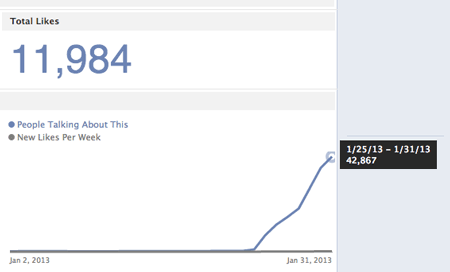
The metrics bear this out. The Freshfully Facebook page’s “People Talking About This” went from hundreds to more than 42,000 after that one particular post.
What does a viral photo of chickens earn? Sales of … beef.
(In your face, Chick-fil-A spokescows.)
“We had posted a grass-fed beef share on our page right after it, and we sold out much faster than normal to new customers we had not had before.”
Beyond sales, Freshfully has had fun with the chicken chatter.
“I’ve had several emails from people asking me for the patterns for the chicken sweaters,” Jen said.
“My favorite comment is from my friend Michelle, who said they look like gifts from their chicken cousins who they only see at Christmas.”
Kim is used to her feathered friends’ fame. “It’s funny: It finds an audience as it gets reblogged from time to time,” she said via email. “This time, being posted on Facebook, seems to have gotten the biggest audience. I do think Freshfully could have credited a bit better.”
Kim and Zach had planned on eating them someday. But they sold the hens (alive) and their coop before moving to Ann Arbor, where they remain chickenless.
“We plan on having chickens again. They were really easy and friendly, and in the long days of summer, one of them would even lay two eggs a day. I definitely encourage backyard chickens, perhaps sans sweaters.”
Papoo and Chalmers could not be reached for comment.
Photo: Kim DeBord (reprinted with permission)
•
- More chickens in sweaters
- Penguins in jumpers (warning: cute and sad)
• • •
My free weekly newsletter has even more
ways to use social media to succeed.
Two questions

I believe I can reduce my communications consultancy down to two questions.
1. What do you want to learn or develop around communications to help your business succeed?
2. Shall it be with me?
The answer to the first question is an ever-expanding set of skills and strategies around storytelling, interaction and marketing.
I use my extensive experience and successes in journalism, marketing, public relations and public speaking to determine your audience profile, your story and your best means for reaching people.
We could collaborate on media releases, editorial calendars, email blasts, branding, writing, editing, search engine optimization, Pinterest, blogging, ad campaigns, strong headlines, in-house training programs or targeted ad buying.
We could develop a plan for your Facebook page, landing page, product launch, blogger outreach, long-term content marketing, video production, keyword research or streamlining metrics.
And those options are merely the beginning. Your brand is unique, which is why I always start with my own long list of questions. Once we determine the best course of action, we move on to the second question.
The answer to that one is Yes, always Yes.
Photo: G. Meyer (CC)
• • •
If these two questions have you stumped,
contact me today for guidance.
Nothing’s more compelling than great storytelling
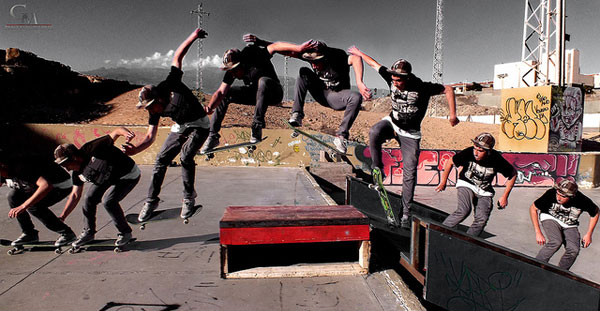
I can’t help you with your communications strategy until you have something worth hearing.
So tell me a story. Tell me how you got started, why you love what you do and what effort goes into your products and services.
Storytelling isn’t a lost art. We lock on to the most compelling narratives every day.
These three examples will help you understand the value of a story worth sharing.
1. Reddit: “What little tricks do you play on your SO (significant other)?”
I found these to be hilarious …
- When we’re in line at the register in any store or mall or whatever I always look at my watch and say “Oh shit, your husband is going to be home any minute!”
- When we drive in the summer I turn on her seat warmer on full blast without her knowing.
- We always use “open and honest time” for times when we need to have a serious talk with each other…it’s like our version of “we need to talk.” Even when I have good news, I’ll say “baby, I need to be open and honest…” and that usually freaks him out. Haha it’s kind of mean, but it really gets his attention.
- He’s deceased now, but he used to like to imitate Pepe le Pew (the skunk from Bugs Bunny) and waltz me around the room. So one day I bought a small toy skunk and we’d take turns hiding it in unexpected places. It has small magnets on each foot, so one time I put it on the inside of the lid of the trunk of the car. It took months for him to notice.
Now I hide it on myself. It’s only January, so I still remember that it’s inside one of the boxes with Xmas decorations, but I’ll forget by the time December rolls around, and will be surprised again.- This is simultaneously the cutest and saddest thing I’ve read in a long time in reddit. internet hugs
- My wife absolutely loves finding loose change around the house. I hide all my loose change around the house.
- Sometimes we play this game where she leaves me for another guy and I lay in bed and cry.
I’m the best at this game. 😦
Takeaway: Stories can be short. One or two sentences can paint a vivid beginning, middle and end.
2. Community storytelling
Birmingham has been gripped in a wave of community storytelling events. Arc Light Stories has featured locals telling tales around a common theme at a downtown restaurant. Earlier this month, a Saturday night event focused on “My First Time: Stories About New Experiences.”
On Thursday and Friday, the Unchained Tour stopped in the Woodlawn area in Birmingham and Montevallo respectively for two shows. The touring performers — storytellers from New York nonprofit the Moth, musicians and circus performers — set out across the South to promote local independent bookstores.
Part of the event features audience participation, with short stories from volunteers.
Takeaway: Stories can from the community, not just the corporation. Share the microphone.
3. L’affaire Manti Te’o
 Sports news site Deadspin uncovered the hoax of 2013: Lennay Kekua, the dead girlfriend of Notre Dame star linebacker Manti Te’o never existed, though she had been covered many times during the team’s almost undefeated run this past season.
The revelation has created a firestorm of intrigue and doubt. Who created this elaborate hoax? Was Te’o a victim or a co-conspirator? If Deadspin hadn’t uncovered the truth, how far would this have gone?
Consider the original narrative for a moment: A mysterious woman hooked a Heisman candidate from afar. The siren song of romance has blinded unsuspecting suitors since long before this online fauxmance, long before the 1897 play “Cyrano de Bergerac.”
Sometimes, we blind ourselves to a cold reality for the warmth of a heart-pounding, truly engaging yet utterly false lie. It might be a fantastic movie or a lover’s whispers, but we give in to the story.
Takeaway: An outstanding story can overcome skepticism, reason and apathy. Use it wisely and well.
Tell me a story. And make it a good one.
Photo: Glen Meye (CC)
• • •
Find more stories to read and share
in my free weekly newsletter.
The bigger Twitter gets, the less I like it

As a blogger and social media user, I use platforms and tools every day. Two of my favorites have been Posterous and Tweetdeck.
That is, until Twitter bought both companies.
• Posterous had a system bug last week that prevented posting new photos. The blogging platform is similar to Tumblr in its ease of posting and sharing photos. As I tried and tried to update a blog, I realized something was amiss.
The irony of social media as customer service is how lousy the customer service is at social media companies. Bug reports, questions, complaints, feature requests and system status alerts seem to be a low priority at these zillion-dollar outfits, including Twitter.
But Posterous doesn’t have a system status page. And its Twitter and Facebook accounts don’t respond to user complaints.
So if something goes awry with your Posterous site, you are on your own.
• Meanwhile, Twitter’s redesign of Tweetdeck for the Mac has left it a shadow of its former self. (The iOS app is gone, as Twitter likes to push its own official crummy app.)
Several key features were dropped in its makeover: search and filter within columns, posting to LinkedIn, instant Bit.ly link shortening, replying to users who retweeted your updates in the new style. The design and user interface were much better before: compact, slicker and with a tweet window that didn’t obscure update columns.
In the pre-Twitter Tweetdeck, I could respond to dozens of people much more quickly. The current version is a chore to use.
Twitter has seemingly dragged its heels on Tweetdeck, favoring its “official” interface on the Web and branded apps. It can’t even keep its financial filings up to date, risking closure by the British government.
This pattern isn’t new for tech acquisitions. Twitter can barely keep its own house together — struggling with monetization issues and defining its direction — so seeing it screw up its properties yields no surprises, only frustration.
It reminds me of how Yahoo bought photo service Flickr, only to make it irrelevant through poor management.
I don’t mind if Twitter wrecks itself from within, though it will leave me without my favorite social media channel. I do mind if it wrecks other great tools in the process.
It may be time to move on to Tumblr and Tweetbot for Mac. Sigh.
Photo: Doctor Rose (CC)
• • •
Need special support for your social media problems?
Contact me today for guidance and help.
How to triple your reading

I love reading. Much of my continuing lifelong education comes from reading. Every single day, I read for fun and for work, though the two often intertwine.
If you don’t care about reading, stop here. The rest of this post is to help you start 2013 out right.
In 2012, I read a ton of books, more than I had in the last few years thanks to these techniques. Being very busy as a consultant and a nonprofit board member and a man about town, I have to squeeze in reading where and when I can. But it’s completely worth it.
I never run out of ideas for posts, or snippets for small talk, or even interesting asides in presentations.
You are strapped for time. You can’t remember the last time you picked up (or finished) a book. Not to worry: You are the perfect candidate for this crash course in reading more in less time. And it won’t cost you a cent.
I have a vested interest in having you read more: I love discussing books and articles with people. I tweet dozens upon dozens of interesting stories I have read and want you to check out. And writing is my primary (though not my only) form of teaching and sharing.
(By the way, I don’t want you to triple your reading as a measure of productivity, though it will be enhanced. I want you to enjoy reading and fit it in within your available time.)
Let’s pledge to read more in 2013 …
1. Learn to speed-read. Bloody obvious, right?
You have so many choices. And why don’t they teach this in school? Talk about a practical skill: I learned years ago in a book and with software.
If you’re unfamiliar with the concept, you train yourself to scan material faster. Your brain can comprehend much faster than we typically see or hear material. (If your mind wanders during a presentation, it’s not just boredom, but also a v-e-r-y s-l-o-w way to receive information, the spoken word.)
You become accustomed to reading faster and absorbing pages and concepts and plot faster. You might not read a dense scientific article as fast as a trashy novel, but you’ll still read faster across the board.
- Author Tim Ferriss explains how in “Scientific Speed Reading: How to Read 300% Faster in 20 Minutes” [1,529 words = 8 min.].
- Or you can try Spreeder.com, which will show you how for free; you can even paste articles for practice.
- Amazon.com has any number of books to learn speed reading [aff. link]. I bet you can find many of them at your local library.
- YouTube has great training videos.
This step alone can make you a superhuman reader. If you practiced in January, think how much reading you could do throughout the rest of 2013.
2. “Read” while driving. I had previously limited audiobooks to roadtrips and business travel. But I realized, thanks to business coach Marc Corsini, that any time in the car could be reading time.
For me, the easiest way wasn’t juggling CDs or hooking up my smartphone. It was having a dedicated MP3 player hooked up all the time. I needed one-button simplicity: Hit Play when I start driving, hit Pause when I arrive.
 I use an iPod Shuffle that I bought new on eBay; battery lasts for about 10 hours typically. You can find them new on Amazon [aff. link] for $25 and up. As a bonus, I can grab it for when I go walking.
It’s small enough and cheap enough that I leave it in the car all the time without worry. (The tiny gadget hard to find, which is a big plus.)
All those commutes add up. Even a 5-minute trip to the supermarket helps me knock out a few pages. (Yes, I’m the weirdo who has mostly stopped listening to music in the car.) I always have a couple of books loaded on the iPod, so I won’t run out of reading material on the road.
I am a fan of unabridged works, but by all means, get the abridged version if you like. I don’t understand why audiobooks come in both flavors but print editions don’t — think about how many more copies authors could sell and how many more books readers could enjoy.
Parents: Find audiobooks that appeal to both you and your kids. I’ve heard it can be done.

3. Hack the library. I have been going to the Jefferson County, Ala., libraries since I was a young boy. I have never stopped.
As much as I love books, I no longer feel like I need to own a copy of most of them. I’m just as happy selling them back on Half.com or simply borrowing them for free from the library.
If you’re going to triple your reading without tripling your book budget, hacking the library is a must.
Our library system in Birmingham is wonderful. They offer so many features, and I try to use as many as possible. It’s worth checking to see if your local library has these services …
- E-books and audiobooks available 24 hours a day online (these go straight into my iPod and iPhone);
- order books, CDs and DVDs from any branch to be delivered to your closest location (I use this all the time);
- return books, CDs and DVDs from any branch to your closest location (only a few restrictions);
- books by mail (for those unable to travel in person to branches);
- automatic delivery of new books by preferred authors.
Bonus library hack: If you need a nudge to return items on time, use the free service Library Elf. It will email or text you several times as a due date comes up. I also have it notify me when my orders are in at my local branch. I haven’t had to pay an overdue fine in years.
Another bonus library hack: If you really want to get through a book quickly, borrow multiple formats (audiobook, e-book and print) of the same title and keep reading no matter where you are.
4. Browse through more free ebooks than you can read in a lifetime. Even if your library isn’t as awesome as mine is, you have the Internet. And on that Internet is a worldwide web of free ebooks. (If you will never ever read an e-book, then skip steps No. 4 and 5.)
- Public domain ebooks are available in many formats within a few clicks; this list from Mashable has more than 20 sites.
- Amazon not only lists its Top 100 Kindle books for sale, but also its Top 100 free Kindle books [aff. link].
All the classics and a slew of modern offerings, which you can grab at no cost and without a library card.
5. Turn your device into an e-reader. What if you don’t own a Kindle? Or a Nook? Or a Kobo? Not to worry.
Your computer, your smartphone or your tablet can all stand in.
I love reading on my iPhone. I’ve done it for years. I understand not all of you love the tiny screen, but for me, it’s perfect.
I always have my phone, so I can read when I’m standing in line or waiting for a client. I read a chapter in bed before going to sleep, and I can switch to white-text-on-black-background in the dark. And it’s free.
I never use my laptop for books; I prefer a printed or audio version, or my phone.
I have six(!) different e-readers on my iPhone, all free:
- GoodReader (Lite version),
- iBooks (comes with iOS),
- Kindle,
- Bluefire (great for reformatting PDF text; required for my library’s ebook borrwing),
- Instapaper (which will be discussed below) and
- Kobo.
 If you’re not familiar with Kobo, don’t worry. I wasn’t either, till my friend Carrie Rollwagen (at right) integrated it brilliantly into her Birmingham coffee shop and bookstore, Church Street Coffee and Books.
Shoppers who prefer the digital edition to the print edition (which, by the way, she can order for you) can purchase it through the Church Street site. The ebook can be read on Kobo devices [aff. link] or using the free Kobo app for iOS, Android, Mac, Windows and even Blackberry.
(Carrie explains it all in this wonderful post [704 words = 4 min.].)
When you use reading apps that sync (iBooks, Kindle, Kobo, Nook), your virtual bookmark follows you from device to device, a real timesaver. (I’m hoping someday for perfect sync, so I can start reading an ebook where I left off in an audiobook, or even a print edition. We’ll figure it out …)
6. Batch your reading using Instapaper. I can be easily distracted with the number of great articles and links that cross my social media paths. And I don’t always have time to read them with focus.
Enter Instapaper.
Any article I find on my computer or iPhone can be bookmarked into one synchronized Instapaper reading list. I can always pull up these articles (regular or text only) and read them when I have a few minutes. Or I can power through 10 of them, time permitting. This allows me to devote part of my day to learning and keeping up with my preferred topics.
I can also send articles via custom email address, Google Reader and many apps; text can be sent to the Kindle and Nook readers, too.
Collect all your favorite news articles in one spot, then enjoy them on a Sunday morning from your device of choice.
Alternatives include Readability or Pocket, both free. I like to use the Readability extension on my Web browser: With one click, it transforms any article into a clean, ad-free, easy-to read format (see example).
Whether you spend 2013 reading for pleasure or for enlightenment, for chills or for thrills, enjoy the words and spread the love.
- Head:Subhead has more advice on how to read more this year.
- All my best #Sundayread suggestions from 2012.
•
What are you reading more of in 2013?
Tell me in the comments.
• • •
Need more reading material?
Try my free weekly newsletter.
The 2012 index to posts

I had a great time sharing with you and learning from you in 2012. Take a look at my posts this year, organized by category below.
Blogging
- How to win at blogging, when you don’t care about winning
- Clark Kent, mild-mannered blogger
- Make a perfect blog post more perfect
- Five Points South Merchants presentation: Hungry for More
- Guest room: How Graphics Can Help You Win Awards and Go Viral
- WordCamp Birmingham 2012: a preview
- WordCamp Birmingham 2012 presentation: How to Win Awards, Influence Readers
- More from WordCamp Birmingham 2012: Video on advanced content management
- Still more from WordCamp Birmingham 2012: tweets and slides
Social Media
- 53 ways to beat social media burnout
- Samford presentation: Social Media Metrics
- Who’s qualified to teach social media?
- How I decide whether to connect with you on social media
- UAB PRSSA presentation: How to Build a Successful Social Media Plan
- Pinterest
- On pins and needles: What are you pushing on Pinterest?
- Consultant’s diary: Winning the war on Pinterest
- Guest room: Three hacks to access your site’s Pinterest statistics
- What Cindy taught me about Pinterest
- How Cindy used Pinterest to land her dream job
- Using Pinterest for live event coverage: the upside
- Using Pinterest for live event coverage: the downside
- How to use Facebook lists for market research
- Webinar – Your LinkedIn Profile: Your Ticket to a Better Job
- I remember when we all saw it on YouTube …
Digital Marketing
- Content marketing: Reputation trumps begging
- The writer’s unfair advantage in digital everything
- At a loss for words: Digital success for nonwriters
- Popularity: the shiniest metric of all
- Popularity: the perks of pursuit
- When content machines go berserk
- Adventures in retail: The story of a super market
- PRAM 2012 conference presentation: Digital Listening
- Everything you need to know about getting attention
Leadership and Management
- When compliments go wrong
- My communications credo
- Business books for your reading list
- Boundaries
- Stop the madness: Tips for outsmarting your smartphone
- Could you survive a 48-hour tethering sabbatical?
- VIDEO: How to network gracefully
Last but not Least
- My trip to PodCamp Nashville 2012
- Why I can’t wait for PodCamp Nashville
- Finding encouragement and loving it
- Dateline: The second biggest city in America without a daily paper
- The end of the phone era
- Beyond the numbers: Feedback from a friend
- The perilous world of user feedback
• • •
Want to keep up with the latest information in 2013?
Be sure to subscribe to my free weekly newsletter.
53 ways to beat social media burnout

Early in my career as a newspaper editor, I recognized one culprit that could destroy morale, harmony and momentum quietly and viciously.
Burnout.
The dedicated journalists around me thought nothing of working late, pitching in and pushing themselves harder and harder to get the story right. And yet, this would eventually kill them. Or, at least, send them screaming from the newsroom.
Fortunately, I was able to nudge my colleagues into healthier approaches. I cared about their well-being more than about any one edition of the paper.
I see the same signs of burnout among my peers in social media. And I’m here to show you another way.
Some of you might be burning out simply from recent news events. “Say, does anyone have an opinion on gun control/gun rights, or mental health access, or how the media has covered it?”
Unbidden, everyone you know and don’t know weighs in with an opinion. And then everyone beyond that complains about everyone else sharing their opinion. Wash, rinse, retweet.
Let’s review the signs of burnout first.
• Dread. If you’re starting to hate your Facebook stream, and consequently your Facebook friends, burnout isn’t far behind.
• Fatigue. Updating and interacting a company’s social media account isn’t like digging ditches, no physical toll. But its mental toll can be sap your energy and cause physical problems: headaches, weakness, nausea.
• Lack of inspiration. Coming up with ideas to fill 300-plus print editions a year can wear anyone out. (In news, this is called “feeding the beast.”) Even the savviest social media managers can occasionally struggle with a clever new update in this 24/7 environment.
• Resentment. Few people want to be left holding the bag. But if you’re in charge of social media — whether you’re the most qualified at your company, or simply because everyone else doesn’t “get it” — you might feel resentful of your colleagues. They don’t have to deal with angry online customers and trolls. They don’t have to fear losing their job (or jeopardizing the brand) because of a mistake in a tweet.
That resentment, by the way, can spill over to fans and customers who will always have questions and suggestions and complaints.
• Sadness. You may choose to spend our time with wonderful friends and family members in real life, but social media obligations may make you feel trapped at the worst Thanksgiving dinner ever. Whether your tweeps bicker over politics or share their incredible good fortune, those updates could bring out the worst in you: envy, irritation and yes, sadness.
You may recognize some or all of these signs in yourself, or in a colleague. Burnout is real, but it isn’t hopeless. This list of suggestions will help you turn it around in social media.
I have used many of them over the years, not only for planning and preparing thousands of issues of newspapers and magazines, but also for writing thousands of blog posts, 40,000 tweets, hundreds of email newsletters and much, much more.
- Limit your time on social media. No more than 30 minutes a day.
- Limit your interactions to people who are asking questions or having customer service issues.
- Stick to a schedule: Check at 9 a.m., noon and 4:45 p.m., and set a time limit on those sessions.
- Set “office hours” for your channel and post them. “This Twitter account is monitored from 9 a.m. to 5 p.m. EST weekdays. Call 555-1234 in an emergency.”
- Delegate. Colleagues can be trained. If they can’t represent your company properly on social media, they’re likely unable to represent it well in person either. You don’t have a social media problem — you have a personnel problem.
- Start with a positive attitude. This is about connecting with people and helping them. I’ve seen colleagues start with an “all customers are idiots” view, which already makes the whole exercise pointless.
- For introverts (like me), understand that social media can enhance your extraversion skills. (And, it can also be draining, so take time to recharge in a quiet space.)
- Use Twitter lists, Facebook groups and other ways to categorize connections to focus on ones that matter. For example, a shoe retailer might have groupings such as Biggest Fans, Vendors, Direct Competitors and Industry News.
- Learn how to mute or block people. The 10 worst trolls probably consume 90 percent of your attention and create 90 percent of your headaches. Ban them now.
- Learn how to mute or block keywords. If someone keeps spamming your timeline with Paper.li or FourSquare or other repetitive nonsense, get rid of it.
- Install your own filter. I thought it was brilliant that Facebook and Twitter users on Chrome could replace political posts with cute cat photos, using the Unpolitic.me extension. (Note: This is not an endorsement of cute cat photos, or cute cats.)
- Write and follow a response policy. Maybe you respond to everyone, even if it’s a polite thank you to a negative comment. Maybe you ignore trolls. A policy will help with consistency and save you from guesswork and wasted effort.
- Develop an editorial calendar. For social media? Yes, yes, yes. Burnout often comes from having to brainstorm 30 times a week at random occurrences. Decide the topics and the tactics in advance, and stick to them.
- Brainstorm with your colleagues. They will help develop new ways to approach your brand and your audience.
- Schedule your updates in advance. This prevents you from being trapped in social media every single minute. I developed #sundayread so I could not only share my love of reading and interact with fellow readers, but also to have at least 1 day a week to free me from social media.
- Build a community from scratch. This takes time, but allows you to set the rules and refine the membership. I created the new Birmingham Google+ Community to foster a civil but lively conversation about my hometown.
- Try a different channel. See above. Exploring a new network — Reddit, Instagram, Pinterest and hundreds more — can spark ideas and connect you with new friends. (Hat tip: Jen Barnett.)
- Vent privately. Sometimes, you just need to let it out to a trusted friend or colleague.
- Take a sabbatical. Whether 1 day or 1 month, clear your mind. I forced a friend to go without her phone for a couple of days, and the world did not end.
- Limit your social media to one device. That might be your office computer, meaning you can’t take your social media work home with you.
- Limit your work social media to one tool. For example, use HootSuite only to manage your company’s accounts while keeping your personal ones on your phone.
- Listen to your audience better. You don’t have to be social media 24 hours a day to understand what people are saying about your brand. For example, I showed a client how to use SocialOomph to receive keyword tweets to her email every day. Google Alerts can help you listen as well.
- Use better tools. You aren’t limited to the Twitter or Facebook sites to do your social media. A wide range of free and paid services can make your work easier and faster. I use Tweetdeck and SocialOomph daily, among others.
- Talk to real people face to face. If social media is where you spend the majority of time, find a way to re-establish a human connection. Take your online networking offline.
- Set a goal. If you or your company don’t know why you’re in social media, you could flop around for years, with nothing to show for it. The best goals have quantifiable outcomes and deadlines: “Increase visits from our Facebook page to our product pages by 30 percent by April 30.”
- Measure return on investment. If you don’t know what your company Pinterest page earns you (or more likely, costs you), you need to calculate the ROI ASAP.
- Narrow your channels. I met with a furniture company that had accounts on seven social media channels, plus a blog. Most have not been updated for months. Do one channel really well than seven really poorly.
- Automate your system. I advise extreme caution here. A typical scenario is a business owner updating his Facebook page, which then sends a duplicate update through his Twitter account. This is tweeting for the sake of tweeting. If you can make your message resonate on multiple platforms and interact with multiple audiences, then go for it. Otherwise, don’t even think about it.
- Set expectations for your audience. Define what help you can give online vs. by email or phone. Let them know how many staffers are helping with Twitter or Facebook, and when. Explain what the usual response times are.
- Set expectations for your boss. Show her what gets results and what doesn’t. Demonstrate to her the reach and the limits of your channels.
- Rewrite the rules. I’ve seen Facebook pages share 30-plus updates a day with fantastic results. I’ve seen Twitter accounts that follow no one but have 20,000 legitimate followers.
- Streamline your process. The hurdles for social media managers can include review of updates before sending (for compliance, editing, legal jargon), IT limitations, getting photos and videos from team members and so on. Do whatever you can to minimize time spent on these intermediate steps.
- Talk with your boss. If he sees social media as important enough to do, but not important enough to improve (through streamlining, shared workload, goal setting, review), you have a bigger problem than burnout.
- Advertise. Sometimes, spending money to promote a campaign is the smarter way to reach a wider audience than blunt force.
- Get training. Learning best practices would make your life easier, no?
- Repeat your updates. The fear is spamming your audience. The reality is a single update will reach a small percentage of them. I repeat my 365 daily blog tips every year, and I have 50 marketing messages I send over and over. Plus, I link to my posts several times, using different hooks.
- Avoiding talking at people. Listen and interact.
- Crowdsource material. Ask fans to share their suggestions, photos and links. Take them and show those fans off to everyone. The @InstragramBham account has done this with an array of local photos.
- Plan your marketing. Social media is but one component of your marketing, right? Make sure your marketing plan shows how it integrates with your other tactics, including e-mail, traditional media, events, content, public relations and so on.
- Elevate others. When I’m down, I find focusing on other people cheers me up. In social media, it’s important to focus on your audience, not just your brand. Show them off, their work, their wit, their brilliance.
- Hire a freelancer. Whether you need good writing or good photos (or even good editing), freelancers can help. Your company can really stand out in social media with clear, concise writing and dynamic images.
- Build momentum. Sometimes, burnout happens because it seems like all those updates have little or no impact. But a few small wins can reinvigorate you. Shoot for a couple of Likes here, a few retweets there. Build on that.
- Study your numbers. How do you know what’s effective and what’s not without looking at metrics? Don’t just tweet and hope.
- Discard bad tactics. Once you study your numbers, stop doing what ain’t working.
- Break the routine. Surprise yourself and your readers. Interrupters are the things that get noticed, the freak updates that go viral, not the cookie cutter updates.
- Consider your audience. This is a mindshift from “What can we share about Brand X?” to “What can we do to help the fans of Brand X?” This is a power move. Are you the store with a heart?
- Set clear boundaries with a social media policy. Ask any 10 employees about what’s acceptable on social media, and you’ll likely get 10 different answers.
- Focus on the fans, not the haters. You’re giving out all the tickets to a rock concert. Do you want to seat the haters on the front row or in the very back balcony?
- Take good care of yourself. Easily the most overlooked. Eat properly, get enough sleep and walk around.
- Keep perspective. In a thousand years, no one will remember your status updates. (And perhaps, in 2 hours.)
- Accept people for who they are. No matter how much we would wish people would curb their tongue or be more civil, they will continue on as always. You can only fix you, including how you ingest and react.
- Accept the consequences. Working in social media is messy. The metrics are fuzzy at times. The wins are fleeting. But it can also be exciting working in the forefront of the communications revolution: talking to people around the world, learning about their interests and needs, sharing in an instant.
- Suck it up. This is what I’ve told myself for years. It’s what gets me through long days and nights. It’s what got me through 40,000 tweets. And to the end of this list.
Photo: Sausan Machari (CC)
•
How are you struggling with social media burnout?
What tips have worked for you?
Share your thoughts in the comments.
•
Don’t miss: How to deal with trolls and haters on your blog
• • •
I can help you survive and thrive in social media,
from training on tools to developing a social media policy.
Finding encouragement and loving it
We all have our challenges and gripes and downers. Three things gave me a real boost last week, and I thought I’d share them with you.
• The first was a great writeup by my pal G. Jones on the Birmingham Public Library blog. The post shares my tips on getting the most out of Twitter. I love when people can use social media to help themselves and discover the worlds around them. Thank you, G!
(Speaking of the library, I just love the librarians! I was picking up a DVD on hold when one mentioned my workshop back in August and mentioned my services to her friend. So grateful.)
• The second was a shout out by Helena Torres on her blog Pin-Ball. She was kind enough to show off my posts on Cindy Wincek Lake’s expert Pinterest skills. Any time someone cares enough to link to my site is a real kindness. Thank you, Helena!
• The third was a chat with my friend about her surprise new job.
Wade: Holy cow, are you now at a new job?
Friend: Yep. I started yesterday. That day I messaged you they had called me and had an interview 2 days later.
Wade: Congratulations, girl!
Friend: I’m pretty excited, overwhelmed, nervous, scared. All those things.
Wade: You’re going to do great. Proud of you.
Friend: Thanks, Wade. Following what you do gave me a lot of confidence to try something new. You should know that.
Wade: Wow, that’s flattering. But never forget: YOU made it happen. You.
Friend: Thank you. It took a lot of convincing that I already was doing what a lot of jobs want. I think a lot of journalists don’t know that. I just would see what you would post and think, wait, I can do that, wait, I am doing that!
Wade: We gotta work on them. It’s their only hope.
Friend: Even as I was giving notice, my supervisor was saying, well, you should be glad you have a job. Which is all I’ve heard for years.
Wade: Sad.
Friend: I ended up making on x bucks more a year that I started 10 years ago. Kind of depressing.
Wade: This new job will be quite the change of lifestyle. 🙂 Some jobs pay a lot, some a pittance. But almost never what you’re worth. Just make sure you get something meaningful out of each one.
Friend: You need to write a book. Or at least a motivational calendar. WadeOnPaper.
Wade: 🙂 I may have a surprise for 2013 to launch in January …
Friend: That would be awesome! Can’t wait.
Thank you, Friend! You really made my day.
This year was great, and next year will be even better. I can’t wait to surprise you and work with you and learn from you.
• • •
Need a pick-me-up? Try my weekly newsletter.
It’s free and doesn’t require a prescription!
Who’s qualified to teach social media?

Gary Warner, UAB’s director of research and computer forensics, has guided his
students to help root out cybercrime. His work was featured on
NBC newsmagazine “Rock Center with Brian Williams.”
I was invited to speak at a college class in the spring. The invitation came from a friend of a friend.
Usually, I jump at the opportunity to teach students, having done so throughout my career. If I don’t know the teacher, I do my homework first.
This one was an unusual case: an instructor starting a class in social media at the University of Alabama at Birmingham, though he appeared to lack any credentials in the area.
Sigh. And I wonder why business owners don’t take social media seriously.
Instructor X normally teaches in a different subject area and appears to be well qualified in that regard, with bachelor’s and master’s degrees in that field. (I’m overlooking the doctoral degree from an unaccredited university. It’s not accepted in three states, so I’m not alone.)
He has 25 friends on Facebook, 20 connections on LinkedIn and a Twitter account with one follower (a spambot) and a single misspelled tweet. Ironically, his university profile explains his emphasis on practical over theoretical learning.
(See? Homework done.)
Perhaps Instructor X has a trove of Facebook pages and Twitter accounts and Pinterest boards that show his exploration of social media. Maybe I judged prematurely.
So I asked why he, as an instructor, is teaching a course in social media without any practical knowledge or experience in social media.
He didn’t answer.
I emailed his department chair the same question. The chair wrote:
“Changes in technology in communication, platforms and uses of both technology and platforms are taking place rapidly. Those changes require both students and faculty to prepare themselves continually to stay abreast of the changes. Dr. X’s research into the communication impacts of social media led to the course you are concerned with.
“No curriculum vitae can possibly reflect the elaborate efforts that go into course development. If, as chair, I had any doubt about Dr. X and his ability to teach a course that he developed, he would not be teaching it. Students who took the initial offering of this class gave it good reviews.
“If you’re asking whether the department would welcome a scholar with formal training and research in social media to the faculty, the answer is yes. But, as are all institutions of higher learning, we are constrained by budgetary restrictions.”
Research, you say? Would we want future doctors to be taught by instructors who’ve done research in medicine or actual physicians? UAB uses doctors as teachers, for example, in the medical school’s pediatrics department, as any respectable medical school would.
But medicine and social media are very different subjects. To become a doctor takes years of study and practice, not to mention tuition in the six-figure range.
To learn social media takes a phone, computer or tablet, a free account and at least a week of practice. The barrier to entry is ridiculously low.
And yet, should UAB students pay thousands of dollars in tuition to learn social media from Instructor X? I bet a few of them likely have more practical knowledge of the basics.
The university’s budgetary restrictions didn’t hamper one of its most successful courses, Social Media and Virtual Communities in Business. It proved to be a hit from its start in 2010, with a full house and media coverage.
The focus is on developing strategy across platforms for various industries. Associate professor Allen Johnston developed and taught the course in 2010 and 2011 for the business school.
But a cursory glance at Johnston’s social media presence reveals an average portfolio: 175 Facebook friends, 28 Twitter followers and 10 tweets in a private account and 151 LinkedIn connections.
His curriculum vitae includes a research grant for social media, along with several speeches to the community.
Would you say Johnston is more qualified to teach social media than Instructor X? I would, even if only relatively. Am I?
A university should provide qualified instructors for all of its subjects. To do otherwise is educational malpractice.
I’m biased, being the son of a retired physics and math professor who taught mercilessly at the University of Montevallo. He published papers on his physics research for 30 years. His former students will tell you candidly they learned in his presence, even those not pursuing a career in science and numbers.
I’m going to pass on this opportunity. I hope those UAB students learn something anyway, even if it’s the value of misspent dollars on a subpar class.
And I’ll continue to teach and promote social media as only I know how. From years of practical experience and successes big and small.
• • •
Need a guest speaker for your class or nonprofit group?
Contact me today — I can appear in person
or via video conferencing.
Business books for your reading list
Books are an important part of my life. I have managed to cram them into my busy schedule, with an audiobook on standby every time I drive anywhere. (Currently listening to “Beyond Band of Brothers.”)
I also have a few books on my phone to read in bed or in waiting areas. (Currently reading “The Happiness Trap.”) This is in addition to the numerous articles I read or scan on any given day.
I am driven to learn, to take in and analyze information and to hone my writing.
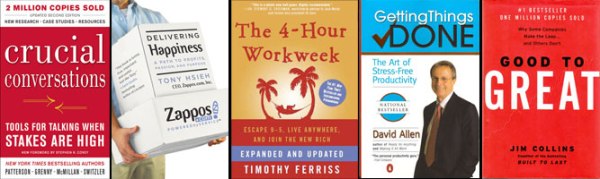
Five books have shaped my thinking when it comes to business and communication. They aren’t necessarily my Top 5, but they do make marvelous conversations starters. (Note: All book links are affiliate links.)
“Crucial Conversations,” by Kerry Patterson, Joseph Grenny, Ron McMillan and Al Switzler: I am overdue for a refresher in “Crucial Conversations,” a book and a course I took 5 years ago. Conversations take place every day, but turn crucial when stakes become important. This book helps me to recognize when interaction has shut down and how to get it back on track. It takes constant practice, but makes for better listeners and communicators. [Amazon | iTunes]
“Delivering Happiness,” by Tony Hsieh: Zappos sells more shoes than any other company, online or offline, but it considers its main product to be customer service. I might even buy my first pair from the site this week. And yet, neither of those reasons is why I’m recommending this book. The question I wrestle with from founder Tony Hsieh’s autobiography is whether hiring to a company’s culture and values makes it more successful in the long run. Read and discuss. [Amazon | iTunes]
“The 4-Hour Workweek,” by Tim Ferriss: I have put Tim Ferriss’ crazy ideas to the test over and over. The current experiment is Project Bulk, whether I can add muscles and pounds to my thin frame, based on his second book “4-Hour Body.” But I’m going to re-read the latest edition of “The 4-Hour Weekweek” to find the best way to approach my business in 2013. In the challenge to be more productive, he dares the reader to focus on what truly brings results. [Amazon | iTunes]
“Getting Things Done,” by David Allen: I like to think of “The 4-Hour Workweek” and “Getting Things Done” as the yin and yang of productivity. David Allen has one of the best systems for managing workflow. But I’ve fallen off the GTD wagon a couple of times, because I find it challenging to do in daily life. You might find it to be the key to unlocking mastery over your schedule … or a ticket to madness. [Amazon | iTunes]
“Good to Great,” by Jim Collins: The methodology alone impressed me. Jim Collins and his team of researchers looked at hundreds of companies to find what consistently made them super-successful. Backed with hard data and solid analysis, “Good to Great” shows why many companies are merely good, but the the truly great ones discard the restrictive tendencies that allow them to settle for merely good. Would that any of us work in a great company at least once in our lifetimes … [Amazon | iTunes]
I hope you’ll find a way to wedge at least one of these books into your busy schedules. Many of you will be getting a new tablet from Santa, so you’ll need something good to read on these empty devices. Or maybe you just need a memorable gift for a friend, colleague or family member.
Happy reading!
•
What business books would you recommend to me?
Let me know your picks in the comments.
•
Need more to read? Take a look at #sundayread, a weekly suggestion box of books and links from Twitter fans.
Boundaries

I’m great at compartmentalizing. Setting boundaries makes focus happen, and sharp focus allows for progress and accomplishment.
Examples:
- Limiting email checks to twice a day.
- Giving out my cell number only to clients.
- Guarding my personal time jealously.
- Defining ahead of meetings the purpose and the duration.
- Outlining what my presentation will cover and not cover for a conference organizer.
- Setting deadlines for steps in a project.
- Keeping my tongue in check on social media.
- Deferring all networking meetings for the remainder of 2012, to resume in January.
- No chat window open on my computer or phone.
- Payment before starting client work.
All of these boundaries might imply rigidity, but instead, it allows for maximum flexibility. If everyone else has control of my schedule, how can I make room when a client emergency comes up? Or a personal one?
Boundaries help me manage my time, my attention, my ethics and my work.
Photo: joiseyshowaa (CC)
•
What boundaries have you set in your life?
Share them in the comments.
• • •
More to learn about communication
in my free weekly newsletter. Subscribe today!
Clark Kent, mild-mannered blogger

It’s a bird! It’s a plane! It’s Superblogger?!
Daily Planet readers won’t be seeing Clark Kent’s byline in the paper any more. The mild-mannered reporter quit the newspaper to start an online news site. (Why does Superman even have a day job? Isn’t fighting Lex Luthor and saving school buses already a full-time job?)
Clark already outshone other reporters (except Lois Lane) with his fast typing and great spelling, but he’ll need all of his superpowers to survive in the blogosphere.
But I can help his traffic and his revenue go up, up and away. I can guide him into being a Superblogger.
1. Stand for something. The best way to stand out among millions of sites is to have a distinct point of view. Superman stands for truth, justice and the American way. A little something for the blue states, a little something for the red states.
• What does your blog stand for?
2. Blog with X-ray vision. Clark became a great reporter because he saw through people (literally) and kept looking for the facts in a complex issue. He’ll need to provide insights and analysis the Daily Planet stopped doing out of fear of displeasing readers.
• What analysis can you provide for your market that builds credibility and readership?
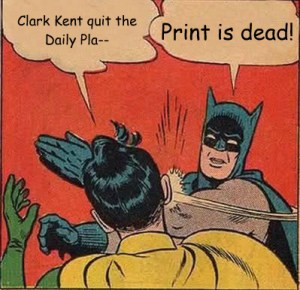 3. Be bulletproof. Shots bounce right off him, as do guns (they always throw the gun). He’ll need that thick Kryptonian skin when blogging. Trolls and spammers will pound him mercilessly in the comments. Jealous competitors, including his former Planet colleagues, will taunt him on Twitter. Fox News will try to get him deported as an illegal alien.
Clark the blogger must be prepared not only for the villains plotting his demise but also for the constant interaction in feeding and promoting a news site. Not all of that interaction will be friendly, but a superblogger must fly above it.
• What comment moderation tools do you have in place to reward good commenters and flag bad ones?
You don’t have to have superpowers to be a superblogger. But superbloggers know they can triumph through personality, analytical skills and perseverance.
Clark Kent has never shied away from a fight, even when the odds were against him.
You will believe a man can blog.
• • •
Is your blog too mild in manner?
Contact me today so I can help make it super.
At a loss for words: Digital success for nonwriters

Photo: Mike Baird (CC)
I’m in love with words, but I sometimes have affairs with pictures.
Writers may have an unfair advantage in all things digital, whether blogging, social media, SEO or email newsletters. But that doesn’t mean nonwriters can’t succeed in the online world.
Use the “Look at me” culture to your advantage with these tactics.
1. Photos. Everyone you know has a camera on hand at all times, usually in their phone. They’re taking photos of their dinners, their pets, their sunsets and their children.
Facebook expert Mari Smith tweeted, “10% of ALL photos EVER taken by humankind were taken in the last 12 months.”
She knows that Facebook users look at photos more than anything else, giving them a chance to Like, comment and share each one. Meanwhile, another tribe has Instagram to show off its artfully enhanced photos.
In a blog post, an author can use one striking image, or string them down the page for an illustrated story, or feature them in a gallery of related shots. Every post deserves an image, but many will forego the visual for the verbal. That’s a big mistake.
Pinterest runs on images. Facebook may require users to share a common language, but Pinterest transcends that barrier with a barrage of colorful pins from friends: shoes, cakes, hairdos, dresses, sofas, cabins, lakes and on and on. A pinner who spoke no English could easily decipher a scrolling wall of desserts.
Do this: Take photos that tell the story of your company. Share those photos. And Like and comment and share other people’s photos.
2. Memes. Variation No. 1 on photos. This popular form of expression is all about what’s trendy or viral, a photo with a short caption overlay.
I have snuck them into presentations, created some for social media and browsed (and laughed) at thousands of them.
Users can make their own — using stock memes or with their photos — with free sites. I like Meme Generator.
Of course, if the user happens to be a really good writer, memes will come more easily to him.

Do this: Share a meme with your fans that will brighten their day.
3. Animated GIFs. Variation No. 2 on photos. These eye-catching pics can be works of art.
No, really.

LSUFreek takes on the Honey Badger, Tyrann Mathieu,
in this animated GIF on Every Day Should Be Saturday.
Terrance Donnels, a k a LSUFreek, has delighted sports fans with his hilariously demented takes on football coaches and players.
I’ve made animated GIFs before, but nowhere near the level of sophistication seen in forums and comment threads. And they don’t work at all on Facebook or Reddit.
Do this: Check out News Cat GIFs, an incredible Tumblr devoted solely to reporter inside jokes.
4. Charts and graphs. Microsoft Excel will make charts for you. Apple’s Numbers will make charts for you. Google Drive (formerly Google Docs) will make charts for you.
If communicators have lots of data, they can present them in an easily digested format, whether in a chart of pie, bars or lines. Those with excellent graphic skills can do maps, cutaway illustrations, step-by-step diagrams and more.

A chart I made in 30 seconds from a spreadsheet,
both for free on Google Drive.
I’m using charts in my new personal site Project Bulk to show progress over time.
The supersize version of this is the infographic, usually a very vertical one showing an array of data around a topic. I’ve found hundreds of them on Pinterest. The great ones go viral, especially on blogs.
Do this: Look at data presented in pages on your company site. Turn it into a visual presentation using a chart or a graph.
5. Slides. You can thank or curse PowerPoint for the invasion of presentations in the business world. Even schoolchildren are assigned to report to their class in slide format.
I love using slide decks for talks and webinars, but I’m fussy about how I build and incorporate them. Often, they don’t hold up on their own as a coherent presentation, but I didn’t design them that way.
Slides: Think Like a Rock Star, by Mack Collier
A user can present simple or complex material in a linear fashion. I use SlideShare to not only store my slide decks, but also to embed them in posts, all for free. It accepts PDFs, PowerPoint, Open Office and Keynote.
Do this: Sign up for a free SlideShare account. (Feel free to follow me there.) Look through the network to find interesting and informative presentations in your industry.
6. Videos. People have made their careers on YouTube. They did it with nothing fancier than a camera and maybe editing software.
If someone has a talent that lends itself to a visual (and aural) presentation, she can record it and upload it. For example, this entire post could have been me giving a 3-minute video tour of blog posts and Facebook pages that use all of these types of illustrative devices.
Video: “Call Your Girlfriend,” covered by Lennon and Maisy
Take Lennon and Maisy, two up-and-coming young singers who found fame through their YouTube cover of Robyn’s “Call Your Girlfriend.” They’re now playing daughters of Rayna James (Connie Britton) in the new ABC drama, “Nashville.”
By the way, a video can be a series of photos or even one image with a musical or vocal soundtrack. These are easier ways to break into the YouTube market without all the steps of shooting and editing footage.
YouTube has started to overtake network television as an option for millions of viewers. Whether the video is one you made or one you found, it can easily attract and keep fans in ways plain text cannot.
Do this: Look at your five most recent blog posts. Search for embeddable video that could enhance your topic.
A company site could be more than just words. It could be a rich portfolio with minimal text. Each page and post could be a video, a chart, a slide deck or a gallery of photos.
A Facebook page could show the vibrancy of a brand through arresting images and clever memes.
All it requires is thinking visually and bringing that look to life.
• • •
The writer’s unfair advantage in digital everything
I still talk with writers who are thinking about making the leap into blogging or social media. Yes, even in 2012.
I tell them that they have an unfair advantage. Those tortured souls who grew up scribbling in journals and Word docs about their weird families and their outcast states know how to command attention. Those young Woodwards and Bernsteins (Google it, kids) who wrote for their school papers and private blogs know how to tell stories about their neighbors and their community.
But they almost never listen.
They fret about sharing “too much” online. They agonize over having the perfect blog post. They don’t want to make a single mistake.
If writers understood, as I do, how working online makes them better at connecting with their audience while honing their craft, they would cast aside their doubts and start today. If they could anticipate the rewards of connecting with other authors, with fans, with bookstore owners, with editors, with book club organizers, with reviewers, they would set a time each morning or late each evening to jot down a scrap worth saving.
But they almost never do.
The most important piece of advice I ever give them is to start now. Not tomorrow. Not in a month after their cousin designs a site with a terrible interface. Now.
Now means blogging into the unknown, without a plan or an audience. It means having faith in your ability to write on a regular deadline for yourself. It requires a commitment that keeps you going into month 2 and month 5 and month 12.
Now means stealing time away from any other activity in your life to sit at a computer or a netbook or a tablet and composing a coherent thought with a beginning, a middle and an end. It means taking an hour to learn how to type in a window and hitting Publish without hesitation.
Now means getting a head start on the millions of other writers who will put it off again, despite their own best intentions. It means crossing the all-important 6-month mark sooner. That’s the point when you see regular blogging pay off, because your audience has grown and your metrics have meaningful trends.
Now means establishing your foothold in newsletters and Twitter and Facebook. It means writing snappy tweets, descriptive Facebook photo captions and 50-word nuggets (or 500-word essays) in email.
I practically beg them to make it a weekly — if not more often — practice. To cross the 6-month mark with five posts is failure. To cross the 6-month mark having fallen off in week 3 is failure. To cross the 6-month mark without proper promotion of each post is failure. The Internet is littered with failed blogs. Twitter is overrun with deserted accounts. Facebook has an abundance of pages with 12 abandoned fans.
Writers have an unfair advantage, but only if they use it.
I have thousands of posts under my belt because 7 years ago this month, I sat down and started writing. I have an online presence that permeates your phones and your Inboxes and your consciences.
I haven’t stopped. I will never stop.
I am by no means the best writer, but I am a better writer because of my digital work. And I’m a better-known writer, which can make all the difference in a world of competing brands and services.
And I’ll keep encouraging other writers to join the community. Even if I already have an unfair advantage over them.
Photo: Justin See (CC)
• • •
I write this newsletter, too.
Subscribe today.


 Birmingham Blogging Academy