WordCamp Birmingham 2012: a preview
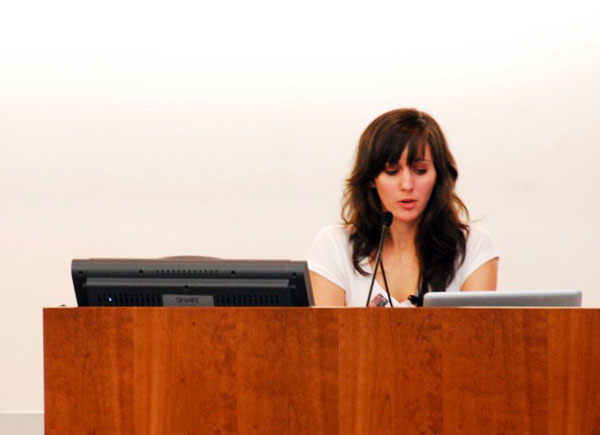
Sara Cannon gives a presentation at WordCamp Birmingham 2010. She’s the organizer
behind the 2012 event.
Some quick thoughts on WordCamp Birmingham 2012 …
• Why you should go: For anyone interested in networking in the blogging, development or design areas, WordCamps remain a great investment for meeting the right people who can help you with your digital business. Quite a few speakers are coming from Atlanta, so expect a sizable group of attendees from there as well.
It’s a good learning experience, though I personally skip most of the highly technical workshops. I’m pushing to see more content-side offerings beyond the beginner level, which is why I specifically developed an intermediate/advanced session. (More on that below.)
You don’t have to be a WordPress user to get value out of this conference. For those even thinking about switching to the platform, this event is a terrific opportunity to ask questions and even transition over at the WordPress Help Desk.
• My session: It’s going to go quick. For me, 40 minutes is a really short time to present anything, simple or complex. You really have about 30 minutes tops if you allow for any questions at all.
That being said, you can hear me talk about “How to Win Awards and Influence Readers in 439 Days and 668 Posts,” a long-winded way of saying “Advanced Content Management and Marketing.”
The official description:
Birmingham’s Best Blogger Wade Kwon reveals the secrets to developing a content strategy. It’s a plan that took an unknown site from just another URL to the Best Website of 2011, according to readers of the Birmingham News.
This session is for intermediate and advanced users, business owners and publishers who want to not only blog more often, but more effectively and with a defined return on investment.
Content marketing isn’t the future. It’s now. And the sooner you develop a plan, the sooner you can slowly win over a dynamic, interactive, engaged audience.
• Why I’m going: I want to meet you. I want to hear what you’re working on with your business, and where you’re struggling. If I can help, I will, or I’ll point you to someone who can.
Also, I have a strong sense of curiosity. I do like to hear what’s going on in the development community, and this gets me plugged in quickly. Plus, I enjoy supporting tech conferences in my hometown, and I’m proud that the Alabama Social Media Association is an official friend of the conference.
• Nuts and bolts: The conference is all day Jan. 14 at the BJCC East Meeting Rooms and a half day on Jan. 15 at Samford University. Tickets for both days are $35, but enter code ALSOCME to get them for $29. (And oh my is it a pain to use the code — see the instructions buried in the registration page comments.)

• Et cetera: WordCamp Birmingham speakers | schedule | sessions in detail
If you’re interested in doing a “lightning talk” (under 10 minutes), you can apply for a spot. Heck, if you want me to answer a quick question, leave a comment below and let me know what topic to (cough) strike.
It’s been 16 months since the last WordCamp Birmingham, but a surprisingly extra long 25 months since the last WordCamp Atlanta. Here’s a look at the speakers and sessions lined up for Feb. 3-4 at the SCAD campus. Tickets are $40.
Photo: Christopher Reding
Content marketing: Reputation trumps begging
I have railed against the excess begging in social media before: It does much more harm than good to brands and to nonprofit organizations.
I simply shall not ever promote causes via “slacktivism.”
But fret not, for a better option is out there.
Most awards and recommendations I’ve ever received are cataloged on my LinkedIn profile. I didn’t request a single one. The recommendations on my work have flowed in over the years for two reason: I know good people, and they know my good work.
Perhaps the best example of rewarding such excellence came last week. Friday, the Birmingham News announced the results of the Birmingham’s Best 2011 readers’ poll. Back in 2009, my site Wade on Birmingham was a runner-up for Best Website.
I always thought the winning site, AL.com, should recuse itself from the process since it is both host of the online survey and sister company to the promoter of the poll. Plus, I thought that no way in hell could any site trump Alabama’s No. 1 online destination.
Was I wrong.
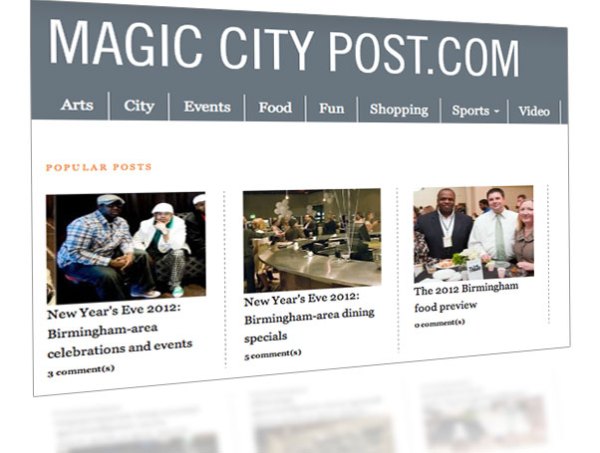
Because my site, Magic City Post, launched in October 2010, won Best Website!
I was shocked. We never mentioned the poll to our readers, or linked to the ballot. We never begged or cajoled or whimpered for votes.
What we did was continue to promote positive things in Birmingham, add posts daily from our team of terrific writers, and interact with people.
It is an unintended but wonderful result of advanced content marketing and development. And it took only 439 days and 668 posts.
But really, we owe everything to our readers who voted for us, not because they had to, but because they wanted to. How else to explain this underdog victory for a site that has a tiny, tiny fraction of AL.com’s traffic and audience.
Something to consider the next time you’re asked to click click click for the cause.
Blog better every day: My daily blog tips from December 2011
 Throughout 2011, I share a daily blog tip via my Twitter account, @WadeOnTweets, at 7 a.m. CST.
You can …
- Ask follow-up questions in the comments.
- Tweet out your favorites.
- Follow #DailyBlogTip on Twitter.
- And follow me on Twitter at @WadeOnTweets.
•
The tips for December …
- Your most popular posts will often show you clear relationship between straightforward headlines and SEO.
- Draw out the 80 percent of your community that holds back. Ask questions and create safe environment.
- More content means more to market. If you’re skimping on content, marketing will be limited from the start.
- Goals for your blog: traffic, readers, leads, strong SEO, sales, ideas, branding, promotion, interaction.
- Idea for mobile: database of local retail and dining formatted for on the go. Ex.: m.spokesman.com/deals.
- Learning the “Rule of Thirds” helped me make better choices in editing photos for publication.
- Load time should be an important factor in determining whether to use a plugin.
- The FTC Act requires bloggers to disclose any compensation for any product or service reviews.
- Reward your best commenters with a special thank you email.
- You can tell which blog communities are having fun and which ones hate each other in a glance.
- What are the most important pages, posts and products in your blog? Market those first.
- The best strategy starts with asking the right questions: goals, resources, challenges, timeline.
- Test mobile themes for functionality: sharing posts, leaving comments, searching the site, playing videos.
- Hosting photos offsite (e.g. Flickr) may speed up load time but increases risk of display error.
- Keep pages and posts distinct. Pages are static, timeless. Posts are date-stamped updates.
- Be aware that some plugins and themes include coding that tracks admin and user behavior.
- Start SEO with good site and architecture. Build on it with content, headlines, tags. Measure over time.
- Even established communities have “churn.” Important to replenish with new readers as others fall away.
- Marketing can be complicated with infinite choices for tactics. Pick two or three, run them and measure.
- Being stuck for topics repeatedly might indicate narrow focus, or even burnout. Get more input quick.
- Checkup: Make sure your goal still rings true. Perpetual motion won’t help in the long run.
- Checkup: Separate your wish list items from reader and business needs. Address the needs first.
- Checkup: Understanding your audience, current and potential, is crucial to content and marketing strategy.
- Checkup: Greatness comes from having a unique and passionate voice. All else merely blends in.
- Keep the spirit of blogging in your heart all year long. It’s always better to blog than to receive.
- Checkup: Learn your metrics, how to measure and increase each one, and calculate return on investment.
- Checkup: Be wary of fear, boredom and poor time management. They are the ultimate blog killers.
- Checkup: Does your blog “pop” visually? Take the time to make sure each post has an eye-catching image.
- Checkup: Mobile isn’t the future. It’s now. Beat your competitors by making your site mobile friendly.
- Checkup: The little things can help you stand out: editing, spellcheck, embedded video, reader focus.
- Checkup: Blogs come and go, but if you keep people at the heart of each one, you’ll succeed every time.
•
•
Want to learn more without leaving your Inbox?
Sign up for our e-newsletter today!

2012? Own it! Here’s how …

It’s not too early to look ahead to 2012. How will you stand out as a brand, a business, a thought leader? By standing out, you make it easier to reach clients and customers, and for them to find you.
1. Share a tip a day. I did it this year with #DailyBlogTip on Twitter. I wrote out a month’s worth, then used the free SocialOomph site to schedule them in advance. What expertise are you hoarding that would make for easy-to-digest tips via Facebook or Twitter?
2. Own a space. Find some corner of the Internet and dominate it. Ideally, it’s your website or blog. But it could be a Facebook page. Or a Google+ page. Funny how people won’t use Google+ because they aren’t sure it’ll pan out. It may not, but for a small investment of time, you can be a brand leader on this growing channel.
3. Go big. Really, really big. I look back on all the things we accomplished through the Alabama Social Media Association in just 1 year, and I’m overwhelmed. I have a problem with focusing on the tiny mistakes and missing the really important achievements: 900-plus attendees, raising money and supplies for charity, networking with people around the world. Think big about what you want to do in 2012, plan it and go for it!
4. Be a better listener. I work on my public speaking. I work on my writing. I work on my interpersonal communication. But what I work on all the time is to become a better listener. That means shutting out distractions. That means listening to the words in the moment, without letting my thoughts wander (classic introvert). You can really stand out by engaging people one on one with a good question and then shutting up. And listening.
5. Zag, baby, zag. Sometimes, you stand out simply by distinguishing yourself in some small way. All your competitors are doing flashy campaigns, so why should you? I stand out because I like to incorporate humor in everything I do. And I stand out because I’m remarkably consistent. By the end of this year, I’ll have sent out 52 weekly newsletters, a first for me. Many companies just stop. By merely writing this newsletter, and the next one, and so on, I stand out.
How are you planning to win in 2012? Share your ideas in the comments.
• • •
If you need help in 2012 with communication,
now is the time to book me for a FREE consultation.

Blog better every day: My daily blog tips from November 2011
Throughout 2011, I share a daily blog tip via my Twitter account, @WadeOnTweets, at 7 a.m. CST.
You can …
- Ask follow-up questions in the comments.
- Tweet out your favorites.
- Follow #DailyBlogTip on Twitter.
- And follow me on Twitter at @WadeOnTweets.
•
The tips for November …
- Take strategy out of your head and put it on paper/computer. Review it periodically to refresh and adjust.
- Test your mobile theme regularly. And borrow others’ phones to see display, interface, navigation.
- Frequency of posts: Start out with quantity, improve with practice, then hold out for high quality.
- Beware the plugin that looks fine in your browser but unexpectedly wrecks the site in other browsers.
- Basic security includes strong password, up-to-date software, check for plugins/themes with malicious code.
- Bound by no-comment policy? Get feedback through email, form, survey, social media and analytics.
- Your blog community isn’t the same as the communities around related social media channels or email.
- Marketing has to be a factor in your blog content, but it doesn’t have to be a hard sell approach.
- Spice up your blog carnival: all guest posts; take opposite position; all photos or videos; under 50 words.
- What is the one problem your blog could solve for users outside the home? Make that a goal for mobile.
- Post images not only provide visual element, but help with thumbnails, visual reference, search, navigation.
- Sometimes, HTML or simple coding can take the place of a sidebar plugin or widget.
- Most users don’t pay attention to copyright and licensing. It’s up to you to write and enforce policy.
- Too many seek out help for “better SEO” without knowing what it is, its value or its cost. Study up first.
- 80-20 rule for blog communities: 20 percent of members do 80 percent of commenting or bringing traffic.
- Solving customer problems is a great approach in marketing your blog. Focus externally, not internally.
- For your next series, include teaser or hook to next part at end of each post. Build that anticipation.
- Idea for mobile: audio tour of retail space, display, property or neighborhood. Show off your world.
- Keep short intro/outro videos on YouTube. Upload new videos, mash together in editor for branded content.
- Consider platforms carefully, but realize that most readers won’t know or care.
- Create a low-level user profile for guests to post, but not allow access to other areas of the site.
- Use custom permalinks not only to extend SEO value but also to keep headlines shorter.
- Give tools to your community: comment rating/flags and threads, profiles, reminders, customization.
- One thing that can make your blog stand out? Gratitude. Be thankful for your readers and customers.
- Marketing plans require discipline, consistency. Flitting among tactics wastes time, accomplishes little.
- The power of guest posts is reaching an audience you don’t normally see on your site. Do your homework.
- Allow users to toggle between mobile and desktop version of your site theme on phones.
- Little touches make for professional videos: tripod for steady shots, music for mood, mics for good audio.
- A small investment in learning how to use your platform pays off again and again in the long run.
- Free speech is an important right. Use your blog to the fullest to exercise it regularly.
•
•
Want to learn more without leaving your Inbox?
Sign up for our e-newsletter today!
5 things your company should stop doing in digital marketing right now

While digital marketing is likely just part of your overall marketing strategy, doing it right can mean great results in a short period of time.
We’ve reviewed five steps your company can take, but did we go over what it should stop doing immediately?
Let’s examine five digital marketing no-no’s, also known as Wade’s pet peeves.
• Stop adding people without their consent to your email newsletter list. It’s not just a good idea — it’s the law, better known as the CAN-SPAM Act.
It’s odd to hear business owners worry about spamming their audience with too many junk emails, but then dump every business card and LinkedIn connection into the subscriber list without hesitation. Spam is spam.
By not abiding by the law, you risk losing your entire mailing list, plus up to $16,000 in fines. Plus, everyone hates spammers.
The best policy is to use a third-party service for emails, require opt-in by the user and make it a simple one-click effort to unsubscribe.
You may not have as many subscribers at first, but they’re going to stick around longer because they chose to join the list.
• Stop autoposting to Twitter. As a night owl, I see quite a few automated tweets from American companies between midnight and 2 a.m. This is just silly. Why not just rent a billboard truck to drive around deserted streets after midnight?
I also see quite a few daytime tweets from marketers updating their Facebook page, which then sends an overly long version to Twitter. The result? Truncated tweets with links back to Facebook.
A couple of real examples:
Happy Monday from a well rested [company name]. Hope everyone had a wonderful Thanksgiving holiday with family and… [link to original Facebook update I will never click]
It’s a wet, chilly Cyber Monday, perfect for staying in and giving your loved ones the gift of partnership in the… [another link back to Facebook]
Those weren’t edited: The tweets actually ended mid-sentence.
It’s a good bet that these active Facebook users long ago forgot that the two accounts were connected — they might not even know they have a Twitter account. Some “expert” told them they had to be on Twitter, and that it would be a snap to set up.
I also see a lot of automated tweets going out once a newsletter is sent or a blog post is published. What you save in time (mere seconds) compares unfavorably to crafting your marketing message deliberately for your different audiences.
• Stop making everything about Facebook. This will be a fatal mistake for many companies over-invested in their Facebook presence.
As Facebook has shown time and again, it is more than willing to foist changes to the site and the interface with little warning or regard to how it affects users, companies, advertisers and app developers. For example, Ike Pigott shares an example of how his company’s mentions across Facebook simply vanished.
Imagine you are one of the billions of people who (gasp!) doesn’t use Facebook. That means each update, photo album, event, poll question and more from your company isn’t readily available to those users.
Give Facebook credit for this: It’s far easier to upload photos into albums and share quick bulletins there than your own website. Facebook is counting on your laziness to keep you feeding the beast day and night.
Instead, use your alternatives: your site and blog, email, Eventbrite and social media channels (Twitter, Flickr, YouTube and LinkedIn, for starters). The more your practice, the easier you’ll find publishing your stuff without the Facebook crutch.
• Stop letting your blog posts wither after publication. Each blog post needs to be marketed, several times and in different creative ways.
A few options off the top of my head: Tweet it; mention it in an email to a valued customer; include it in the email newsletter; link to it in future related posts; turn it into a presentation or a live chat topic; promote it among trusted bloggers; update with additional information.
(And if you’re interested in how to market your blog overall, I have 31 tips just for that.)
• Stop handing over money to marketers without metrics. Isn’t this the common lament of every consultant?
When we have our initial consultation, one of the standard questions I ask is about your numbers. How many subscribers, page views, visitors and clicks do you have? How many customers, sales leads and conversions are you after in the next 6 months? And so on.
Often, the ad agency or Web developer who came before me provided nothing in the way of metrics. No statistics, no training on how to measure them, nothing. They threw their client into the middle of the ocean with a life vest and no compass or radio.
I will show you how to measure the numbers. I will show you what each one means. I will help you set goals and achieve them through digital marketing with proper training and thoughtful strategy.
• What are your pet peeves in digital marketing? Sound off in the comments, please.
•
If you need help with your company’s digital marketing,
let’s talk today.
5 things your company could do in digital marketing right now
Your company likely has the tools in place online, but isn’t using them to their fullest potential, if at all.
Let’s look at five ways to improve your digital marketing right now. You don’t have to do all of them, just one or two of them consistently.

• Let subscribers know the latest news or give them helpful advice in your newsletter. For some reason, you may have fears about your readers. Spamming them, bothering them. Try instead in trusting them and investing in them. If you can’t remember when you emailed them about what’s going on at your company, it’s time you reconnect with them.
Example: A Birmingham restaurant, Urban Standard, does a good job with its weekly updates. In the latest edition, the company shows off its newest hires (click the image at right to see full size). Simple, but shows the heart of the operation. (Too bad the revamped restaurant website has no place for you to subscribe to the newsletter. Oops.)
• Share something of interest several times a day on your company Facebook page. Two aspects are important in succeeding. First, vary your posts to include photos, shared updates from other companies’ Facebook pages, videos, questions and more.
Example: I love what my business partner Emily has shared on the ShopBirmingham.com Facebook wall, a great assortment of items of interest to local shoppers.
Second, post updates manually. For the time being, Facebook is giving higher weight to links and posts shared via the “Write something …” box on the wall. (As opposed to using third-party apps such as Hootsuite.) That emphasis on “live” posts means more visibility and engagement from your fans.
• Stop trying to “beautify” your blog — just use it. It worries me when business owners tell me they’re spending thousands of dollars to upgrade their site, but have no real purpose behind it other than “It’s due for a makeover.” What good is a spiffy new site if you intend to continue your neglectful ways? Post something to your blog, and then 7 days later, do it again. And again.
Example: One of my clients, fi-Plan Partners, has done a great job on its blog of developing an editorial calendar, hitting timely topics and showing off the depth of expertise from all of its in-house experts. You’ll find three posts a week on all things related to finances and the economy.
• Dive into Google+. Make a plan, create your company page, promote it, make an easy-to-remember gplus.to short URL, share some interesting items in your company stream and hold a video Hangout with up to 10 people. Your page can’t “follow” anyone (except other pages) until that person follows your page first. (Somewhat similar to Facebook company pages passively waiting for fans to Like it, but can still connect with other pages.)
Special tips: First, tour personal profile can Circle as many people as you like, which makes for a richer experience. For local businesses, it might be helpful to know who’s actually using Google+ in your city and what they’re saying. You can view the Nearby stream, even on your desktop. Then add them to a new Circle; you can see the one I created for Birmingham.
Second, use the “Search Google+” box at the top to see what people are talking about, based on keywords and hashtags. A good way to keep up to date with trends and feedback. For example, you can see the latest on Google+ about Penn State, including “Best of” and “Most recent.”
Note: Google+ has not made metrics available yet, so you have just a few to go by: number of followers, number of +1s and shares and comments, traffic to site, etc.
• Start brainstorming your digital marketing plan for the first half of 2012. What do you want to accomplish? How will you measure it? What are your expected costs in money and time?
Make a plan, execute it, adjust as needed, measure along the way.
Don’t wait till the new year to get started. These five suggestions are relatively painless, but can help your company stand out from the ones standing still in their online marketing.
•
Want to learn more without leaving your Inbox?
Sign up for our e-newsletter today!
The LinkedIn networking challenge: results
In 589 days of one-on-one networking on LinkedIn, I can tell you that it’s one of the most valuable tools I’ve ever used.
 And it didn’t cost me a dime.
Round 1 of the LinkedIn networking challenge is complete, and it has been both beneficial to my consulting business and eye-opening in how effective it has been.
All I did was contact people daily in my contact list, going in alphabetical order. I’d ask them about their work, their lives, anything that struck me as interesting. It helps to have a genuine curiosity about the people to whom you’re connected.
I admit, I let it falter for months on end. Only within the last few months did I jump back in full steam, contacting three people a day.
Early on, I reported a 61 percent response rate. At the end of contacting 500-plus people, I’m happy to announce the response rate was 64.7 percent.
That is huge. Despite having had whopping returns on email mailing lists, in the 40 and 50 percent range at times, this was phenomenal.
It led to a few of my most important projects in 2010 and 2011. It cemented that “top-of-mind presence” that helps speed along referrals to me. It helped others understand, when they asked me, what I do for a living and how I can help.
My network has grown by 55 percent, giving me more valuable connections in my network. As a rule, only people I’ve met are allowed in. No blind networking for me.
That large network makes it easier for me to make good referrals to people. If you ask me about people to know in Charlotte, or those who are skilled in PHP or accounting, I can look up great professionals in my LinkedIn network to send to you. (Of course, if you’re in my network, you can look them up, too.)
I have more people to contact in round 2, skipping over any who didn’t respond in round 1. Some 60 percent will be new contacts, which means starting the conversation as before, with basic questions. For the other 40 percent, a continuation from wherever we left off a year ago.
The value in a social network comes from the effort you put into it. I’m going to put more time than ever — but still only a few minutes a day — into LinkedIn.
I urge you to try it to develop your business and your network.
- Take a look at my awesome LinkedIn profile.
- Learn how to do your own LinkedIn networking challenge.
Photo: Shelia Scarborough (CC)
•
If you need help with getting the most out of LinkedIn
for yourself or your company, let’s talk.
Blog better every day: My daily blog tips from October 2011
Throughout 2011, I share a daily blog tip via my Twitter account, @WadeOnTweets, at 7 a.m. CST.
You can …
- Ask follow-up questions in the comments.
- Tweet out your favorites.
- Follow #DailyBlogTip on Twitter.
- And follow me on Twitter at @WadeOnTweets.
•
The tips for October, all on marketing your blog …
- Marketing: What is the message you share through your blog? Define it, hone it. It is the core.
- Marketing: Your company’s target audience determines how and where to market your blog.
- Marketing: Most plans require time and money. Set aside both in the budget to ensure proper execution.
- Marketing: Make a plan on how to market the site overall, individual posts, giveaways, other channels.
- Marketing: Easier to reach those who’ve already shown an interest, so make RSS/email subscriptions easy.
- Marketing: Easiest places to link to blog: Email signature, LinkedIn profile, Facebook and Twitter pages.
- Marketing: Easiest items to brand: Business cards, stickers, buttons, T-shirts, other promotional items.
- Marketing: Easiest ways to go viral: Work with your confederates, promoters and fire starters.
- Marketing: Easiest metrics to track: Unique visitors, page views, social media shares, comments.
- Marketing: Make sure your blog is easy to find on your company site with prominent link, latest headlines.
- Marketing: Having your blog show up the way you want on Google involves proper metadata “under the hood.”
- Marketing: Process becomes easier as your site adds content. Opportunities abound with solid foundation.
- Marketing: Leaving good, relevant comments on blogs is a great and organic way to lead back to your site.
- Marketing: Bring in readers by finding them on other sites through guest posts. Difficult, but valuable.
- Marketing: Harder but important metrics: calls, emails, foot traffic, sales, you know … real conversion.
- Marketing: Always start with good content, products and services. Why bother otherwise?
- Marketing: Don’t use yourself as the test subject for tactics. Your target audience perceives differently.
- Marketing: Your audience is bombarded by messages all day. Your challenge is to cut through the clutter.
- Marketing: Know your compliance, from CAN-SPAM to FTC regulations to Facebook contest rules.
- Marketing: Flexibility is important. As your blog evolves, as your readers evolve, so must your plan.
- Marketing: Don’t think about just your audience, but groups within that audience. Segment accordingly.
- Marketing: Experiment, measure, adjust. It applies to all things Internet, and so it applies here, too.
- Marketing: Email remains a best bet for consistent, measurable results. Make signup easy, and use regularly.
- Marketing: Your secret weapon is your personnel. They must read, write and understand the blog.
- Marketing: Bringing attention to your blog should show off your specialty: expertise, service, sharing.
- Marketing: It isn’t about what the competition is doing. It’s your brand, your site, your audience.
- Marketing: Calls to action: Contact us, comment, take a survey, download e-book, share post, subscribe.
- Marketing: Make an irresistible offer through compelling call to action, limited time, high value.
- Marketing: Easy: Getting people to your blog. Difficult: Getting people to *return* to your blog.
- Marketing: Your blog’s personality goes a long way in helping it stand out, attract readers and customers.
- Marketing: If your blog is invisible, fix it with high-quality marketing. Show the passion for your site.
•
•
Want to learn more without leaving your Inbox?
Sign up for our e-newsletter today!
More than a dozen ways to learn from me, all free

I give away something every day of the year. Absolutely free.
You may know about a few of these outposts, but if you’re looking to learn something new, or just have an insatiable curiosity about communication, let me guide you to all my freebies.
• Twitter @WadeOnTweets: It’s all happening in real time: links to interesting and entertaining things across the Web. Plus conversation, questions, sass and surprises. It’s getting close to 4,000 followers. And you don’t need to have a Twitter account to follow along.
If you prefer just seeing the tweets in a simple weekly digest, I keep all 27,000-plus on file in my collection of Twitter logs.
- You can also see them mirrored on my personal Facebook profile. We might not be Facebook friends, but you can subscribe to my updates and still leave comments and questions or lurk to your heart’s content.
- You can also see a select few mirrored on my LinkedIn profile, but I’m picky about who’s in my network there.
• Blog posts: You’re reading one right now. I have thousands more. I’m doing regular posts here, plus some at the new Alabama Social Media Association site, once in a while at Media of Birmingham and some at Magic City Post (though more editing and site management). Not only can you see how I write, but different approaches, techniques, calls to action and other ways to jazz up your own blogging.
(And if you prefer using RSS, each one of those sites has an RSS feed, naturally.)
• Guest blog posts: I was lucky enough to pop up on quite a few blogs this year. Typically, I’ll let you know on Twitter or in the newsletter. Soon, I’ll likely have a roundup post on this site to guide you to the hidden gems out in Internet land.
• Birmingham Blogging Academy newsletter: It’s awesome. This award-winning weekly email guides you to my best stuff, shows where I’ll be speaking next and points out great events, trends and more. Subscribing is easy and free.
• Speaking engagements: Whether it’s a college classroom via Skype or the monthly Birmingham Ad Fed luncheon, giving talks on communication, social media, blogging and more is where I really shine. Contact me about booking me for your next corporate event, conference or meeting.
• Google+: A work in progress. More than 600 people have added me to their circles in just a few months, so I must be doing something right. Look for me to push harder on blogging, with conversations, Hangouts, networking and sharing in the near future.
• Alabama Social Media Association: We work very hard to share as much as possible for free. That includes free monthly social events and five free educational luncheons a year. We’ve had nearly 1,000 attendees total at our events since launching in March, so please join us and meet the ever-growing social media community in town. Sign up for the ALsocme free mailing list.
• Free consultations: If your company needs help with communication strategy, training, social media, blogging, media releases, public speaking and more, I can help. I’d be happy to sit down with you to help evaluate your goals and your needs. Contact me today.
We might never work together, but if you find some of my advice helpful, I’ve served my purpose.
Photo: See-ming Lee (CC)
•
I want you to shine. Contact me, and let’s work
together to help you and your company succeed.
Blog better every day: My daily blog tips from September 2011
Throughout 2011, I share a daily blog tip via my Twitter account, @WadeOnTweets, at 7 a.m. CDT.
You can …
- Ask follow-up questions in the comments.
- Tweet out your favorites.
- Follow #DailyBlogTip on Twitter.
- And follow me on Twitter at @WadeOnTweets.
•
The tips for September …
- Blogging for fun? Do it. A great hobby, a great way to connect to others. Plus, no monetary pressure.
- Designing for mobile means simple navigation, easily digestible content, reformatted graphics, clean look.
- Many bloggers post narrated photo essays, adding visual interest while enhancing storytelling.
- Watermarks won’t keep images from being stolen, but can at least identify their original website.
- Make sure your blog platform is integrated into your main website for SEO, metrics and seamless look.
- Spend the $10 to have a custom domain name, even if you’re on a free site like WordPress.com.
- Headlines are the shortest, most important writing you do. Don’t make them an afterthought.
- You can have great blog and no community, or lousy blog and great community. Shoot for the best of both.
- Use a blog carnival to write one post about one topic but cross-link to other blogs on the same topic.
- Your biggest untapped audience? Mobile users. Solve their problems on the go to win them over.
- Content that stands the test of time can not only help SEO, but also provide lasting value for your site.
- Make sure your developer communicates regularly about plugin integration. Don’t let one wreck your site.
- Site security isn’t a one-time fix. As threats evolve, so must your methods to protect your blog.
- Anonymous comments. Pros: Allows people to share freely, candidly. Cons: Can lead to attacks, disruption.
- Paying attention to online and real world communities can help niche blogs sharpen focus, gain readers.
- Starting with a strategy is the difference between business and hobby, success and failure.
- Don’t just think “mobile,” think “iOS.” Incorporate pinch, drag and other gestures into mobile interface.
- Topics that draw readers can’t always be predicted. Variety in content allows for the next winning post.
- Platforms sometimes need fixes to run properly. Have an expert standing by for answers and repairs.
- With site policies, good examples can mean better results than a list of forbidden actions.
- Good SEO comes as site develops. Great SEO begins before site architecture has begun.
- A strong community not only has dissenters, but embraces them and learns from them.
- A series gives your site multiple opportunities to be found in search, more ways to show expertise.
- Many blogging platforms have smartphone apps, making it easier to blog and manage sites on the go.
- Video bloggers can now record directly to YouTube, saving time without having to upload.
- Make connecting easy: Prominently display big social media buttons near the top.
- Privacy options: password-protected posts or site; not listed on search engines; registered users only.
- Comments enrich a blog with dialogue and increased SEO value, plus serve as another metric for growth.
- Good karma builds blog communities. Support other bloggers through comments, ideas, purchases.
- Social bookmarking sites can be a terrific place to share posts, find ideas, connect with new community.
•
•
Want to learn more without leaving your Inbox?
Sign up for our e-newsletter today!
“Talk of Alabama”: Alabama Social Media Association helps the community

Video: Wade Kwon and Ed Bowser discuss social media and the
Alabama Social Media Association on ABC 33/40’s “Talk of Alabama.”
This week, I had the opportunity to talk about my favorite cause, the Alabama Social Media Association. (It was a last-minute thing: I was filling in for a sick colleague.)
We had a nice segment on ABC 33/40’s “Talk of Alabama” with Maggie Poteau, who had great questions about how small businesses can use social media to succeed. Fortunately, I had my pal Edward T. Bowser of Luckie and Company to tackle the really tough questions, and do so clearly and with sound expertise.
My thanks to ABC 33/40 and Ed for this appearance.
Please take 3 minutes and 45 seconds out of your day to watch the video, and let me know if you have additional questions. Enjoy!
•
Want to find out more about how social media can help
your business? Contact me and let’s work together today.
The real Best Tweeter in Birmingham
 I am flattered. I am humbled. I am agog.
Thank you, Birmingham Magazine readers, for selecting me a second consecutive year as Best Tweeter in the Best of B’ham 2011 online poll.
It means a lot to me to be singled out for something I do for fun and for my job, for something that is at times rather silly and at other times a valuable and urgent way to share vital information.
Here’s what writer Jena Hippensteel said …

Best Tweeter:
WadeontweetsIn the year since he became the first winner of our Best Tweeter award, Wade Kwon has gained more than 1,000 followers. Kwon is a former Birmingham Post-Herald and Southern Living writer and editor who now makes his way as a full-on “citizen journalist” through Birmingham Blogging Academy and Magic City Post. He gives followers a mix of local news, comical personal statements and analysis. twitter.com/wadeontweets
FINALISTS : James Spann, meteorologist, twitter.com/spann, Taylor Hicks, entertainer and restaurant owner, twitter.com/TaylorRHicks
Pretty good stuff, right? Don’t worry, I’m not going to get a big head over this. Y’all are good at keeping me honest and humble.
One perk of all this fuss is that it will give me a chance to shine the light on other tweeters worth your time. I had occasionally shared these Twitter luminaries with the simple request, “Recommend you follow …”
I plan to resume that feature, as early as next month, with daily tweet recommendations of who I believe warrants attention and why.
It is an awards acceptance speech cliche to point to a more deserving nominee while snatching the trophy. But as I look back on 2011, I know in my heart that James Spann is the real Best Tweeter in Birmingham.
He should be up here accepting the virtual trophy, not me.
Birmingham’s TV meteorologist extraordinaire @spann has earned it. In 2011, I have written about his Twitter expertise not only on this site but also in a local newspaper.
The reasoning is simple. Yes, Spann has nine times my Twitter audience. Yes, he is a machine when it comes to tweeting. And yes, he is considered not only a top forecaster (having won the category in the same poll in 2010 and 2011) but also a top communicator.
But one inescapable fact puts him far above the rest of us on Twitter.
Spann saves lives.
The April 27 tornadoes killed 239 people across Alabama. Had it not been for Spann sharing real-time weather data and warnings through Twitter, going beyond his broadcast duties, the death toll would have been much higher.
In the aftermath, he continued to use his Twitter channel to reach tens of thousands of people in an ongoing effort to aid rescue personnel, direct food and supplies and give comfort in a difficult time. What I share is sometimes useful — what Spann shares is often life-saving.
Fortunately, we can all be a @spann in social media. We can spend the time to grow our audience, to be generous in sharing what others tweet, to listen carefully and to respond quickly and helpfully.
All it requires is a love of and a commitment to your community.
Also:
•
I want you to shine in social media. Contact me, and let’s work
together to help you and your company succeed.
Blog better every day: My daily blog tips from August 2011
Throughout 2011, I share a daily blog tip via my Twitter account, @WadeOnTweets, at 7 a.m. CDT.
You can …
- Ask follow-up questions in the comments.
- Tweet out your favorites.
- Follow #DailyBlogTip on Twitter.
- And follow me on Twitter at @WadeOnTweets.
•
The tips for August, all on getting started …
- Getting started: What do you and your business want to accomplish? Is blogging the best tool for the job?
- Getting started: For blog name, using a topic is less personal, but has better resale value.
- Getting started: For blog name, using your name has high branding value, but almost no chance of resale.
- Getting started: A graphic artist and photographer can help your site launch with polished, distinct look.
- Getting started: What is the one way you shine? Helping others, making them laugh? That’s your blog focus.
- Getting started: Personality goes a long way in making your posts sparkle. Don’t shy away; embrace it.
- Getting started: The most important page? Your “About” page. Explain the site, introduce yourself.
- Getting started: Decide your licensing: copyright, Creative Commons, public domain, copyleft.
- Getting started: No site is perfect on launch. Make your fixes as you go.
- Getting started: Brainstorm a topic list, headlines and images. Lead with your best stuff.
- Getting started: Drop the notion that people will read your blog because it exists. Plan to market it.
- Getting started: Most important feature to include is email capture system, for a newsletter or an ebook.
- Getting started: Stockpile completed posts, to get your blog off to a smooth start.
- Getting started: It’s not the platform, the computer, the desk, the look. It’s you that makes it go.
- Getting started: Build time into your schedule for blogging, lest it become a non-priority.
- Getting started: Vow to make each post informative, inspiring or entertaining. Hopefully, all three.
- Getting started: Investing money in a site makes it real, ups your commitment to make the blog work.
- Getting started: Plan your editorial calendar with assigned writers, deadlines and art.
- Getting started: What will your site look like to a mobile user? A tablet user? Design for them, too.
- Getting started: Determine the goal of your site. Will it be customer service, sales or ideas?
- Getting started: Spend extra time on usability. Make navigation and leaving a comment dead simple.
- Getting started: Ask colleagues and friends to test the site, and act on their best feedback.
- Getting started: Make contact info prominent: email, phone number, contact form or Twitter handle.
- Getting started: Sprinkle images and videos throughout the site to add flair, color and energy.
- Getting started: What is the promise your site is making with the reader? Never forget it.
- Getting started: Think speedy and simple. Faster load time means more traffic, better ranking.
- Getting started: Use keywords for URLs, not numbers and coding, for strong SEO out of the gate.
- Getting started: Have someone else proofread your copy, down to the smallest item.
- Getting started: What’s better than a site map? A site tour page that introduces features, policies.
- Getting started: If you don’t know how to do something, ask ask ask. Questions make you smarter.
- Getting started: Perfection is your enemy. The more you tinker, the more you delay. Get blogging.
•
•
Want to learn more without leaving your Inbox?
Sign up for our e-newsletter today!
Is blogging writing?
I have had some disturbing conversations with a couple of friends of late.
 They are great bloggers. Passionate. Funny. Prolific. With a great relationship with their audience.
But when I ask them if they consider themselves to be writers, the answer is a humble and emphatic No.
Were they overtaken with a sudden case of modesty? Had words failed them in the moment?
Let’s look at the title of “writer.” In some circles, the writer is exalted, a man or a woman of letters, an astute observer of society and history and reality. The writer is smarter than most, getting away with the most outrageous statements through clever wording or simple wit. They have no need of their giant paychecks or book advances, but accept them for the good of humanity.
Who wouldn’t want to be one of them?
The title of “writer” brings another common perception to mind. This lowly scribe scrapes by to make a living, living in the margins of our world, preying on our basest urges to string together pulp novels and propaganda. They work all hours for their “craft,” they smell funny, and they are perhaps one notch above con artists and baby killers.
Yikes. Who would want to be one of … them?
Bloggers, of course, are both. Their pungent aroma announces their arrival well in advance of their actual presence. They are paid handsome sums to do nothing but conjure sentences from nothingness. They work all the time, they are lauded for their unique views on life and strife, and they are both loved and loathed, dissected daily yet often misunderstood.
I’ve been a writer all my life. I’ve been a blogger for 6 years. It took me a while to embrace the term “blogger,” but I have done so enthusiastically.
If you blog haphazardly and with reckless disregard for structure or logic, you’re a writer. If you’ve ever earned even but a penny from AdSense on your blog, you’re a professional writer. And if you sit in your ratty pajamas at a rickety table with a wheezing laptop while churning out your latest rant against the government, the other women in your book club or the Almighty, you’re a damn writer.
Shun not the title of writer, you bloggers of the Internet. It not only represents the best compliment and the worst insult I could ever hurl at you, it also reveals your true essence: someone who can scarcely believe they do what they do for a living.
Is blogging writing? Please share your thoughts in the comments below.
•
Looking for more insights? Subscribe to the free
Birmingham Blogging Academy newsletter!
Blog better every day: My daily blog tips from July 2011
Throughout 2011, I share a daily blog tip via my Twitter account, @WadeOnTweets, at 7 a.m. CDT.
You can …
- Ask follow-up questions in the comments.
- Tweet out your favorites.
- Follow #DailyBlogTip on Twitter.
- And follow me on Twitter at @WadeOnTweets.
•
The tips for July …
- Headlines, tags, categories, photo names, repeated terms, keywords: Every bit helps SEO.
- Your blog community’s leaders: the most frequent commenter, the sage or the one keeping others engaged.
- Keep idea lists not just for topics, but for types of posts, design, promotions and more.
- A blog can be ultimate freedom. Use it responsibly, but use it!
- Sometimes, the best way to write a post is on a new document or a sheet of paper. Minimize distractions.
- Why attend conferences? Learn, network, share, teach, stretch, brag, shop, ask, laugh, dream.
- Without goals, you have no action steps. Without action steps, you remain trapped in place. Goals first.
- What’s the one takeaway you want the reader to get from your post? Start there, and build around it.
- It’s a tricky balance, but live the life you want to blog about.
- Set up a short intro or outro clip to add to your videos, to make branding quick and easy.
- Does your blog post start with a bang, end with a whimper? A strong closer makes a big difference.
- A well-defined goal keeps you on track, even shapes topics, sidebar content and strategy.
- Marketing department doesn’t have to do it alone; find passionate colleagues and train them up to blog.
- Before publishing, run spellcheck, test your links, add your tags, preview your post, tighten word count.
- For a series, link the parts together so readers can jump to the parts they want easily and quickly.
- U.S. copyright is automatically in place once published, even without stated copyright notice.
- Can a mobile version of your site provide functionality of app at lower cost? Consider audience, goals.
- A private blog can serve as company intranet, newsletter, forum, training center, support system and more.
- A marketing plan can help your blog by focusing on audience, determining action steps and tactics.
- Trying to get unstuck? Write the first line. Then keep going. Edit later, but keep the words flowing.
- As long as you’re willing to do the absolute bare minimum, you will not get very far.
- My weapon of choice in marketing my blog? Email. Everyone has an address; metrics easy to use.
- Content is a great SEO strategy. Let ‘er rip on the posts and stick to a schedule for fastest results.
- What to look for in a platform: flexibility, cost, design, support, expandability, number of users.
- Follow the rule of the Internet for each post: Be interesting, be informative or be entertaining.
- Higher purpose of your blog could be serving others, through fund-raising, volunteering, informing.
- One great way to make your posts better before publishing? Cut excess words. As many as you can.
- Experimenting with topics and approaches can be a way to expand your audience or escape a rut.
- Speed up your blogging by learning and practicing the keyboard shortcuts for your platform.
- The ebook in your future might come from the posts on your present site.
- If you solve a problem for readers in your posts, you might just win them for life.
•
•
Want to learn more without leaving your Inbox?
Sign up for our e-newsletter today!
How public speaking can guide your business

Many of you are scared of public speaking. Who wants to talk in front of a bunch of strangers, knowing that any minute you could make a total fool of yourself.
Some of you are allowing that fear to hold you back in your career. You may be the best at what you do, but we may never know it, because you won’t step up to the mic.
Let public speaking guide you in how your business can grow and brand itself.
I’ve given speeches for most of my career, many planned, a few spontaneous (or at least, unrehearsed). Even in front of the smallest of audiences, I’ve learned what inspires people, what can drive sales and what is really on the mind of the buyer. I’ve branded myself and my business in a very distinct and personal way.
Exposure can be very important if you’re in services, like my consulting work. Early on, I took every speaking opportunity that I could. And you don’t have to try too hard: Most communities have dozens of opportunities to speak: conferences, workshops, professional groups, civic groups, Ignites, TEDx’s, BarCamps and more.
For me, it was a fun way to try out different topics and get my name out there (it still is). For you, it’s practice time. Committing to an event is the first step in getting over a fear of public speaking.
Speaking at events across the country has paid off. My reputation has opened new doors for me in speaking and in consulting. People understand that I’m knowledgeable about communications, and that I can talk and interact with audiences in a meaningful, educational and entertaining way.
I’ve even had a few attendees pay me a high compliment: They came, not because of the topic, but because of me. They knew they’d get something out of a Wade Kwon presentation. Wow!
That is extremely gratifying. For you, it can be a big boost to your confidence. Speaking before an audience will not kill you, but you may not believe me until you experience it for yourself.
Beyond ego gratification, I do learn a lot when I speak. That’s because I rig the game. I don’t talk for an hour; I talk for 40 minutes and ask questions and take questions for 20 minutes. I ask questions to do research: How are people embracing a trend? What’s the biggest problem they’re trying to solve when it comes to marketing their business?
And I take questions because that’s when audience members reveal what their real needs are: what training they need, what areas they want to learn about, where the next consulting gig lies.
For you, the payoff can be learning about whether your startup idea could work. Or whether your book idea has a potential readership. Or simply learning how to match up your talents with what the marketplace wants right now.
I end up turning down quite a few opportunities these days. I am more deliberate about which audiences and which messages can help my business. It is a good place to be.
Several friends are moving into the speaking spotlight, and they will bring their terrific personalities and their know-how to the mix. Join us.
- A great opportunity this weekend will be BarCampBirmingham 5.
- Even a 5-minute talk takes good preparation. Here’s how.
•
Need help with your next speaking engagement?
Contact me for a free consultation.
A nation of beggars: the dark side of social campaigns

Charity begins at “Like.” Or so it would seem.
My fellow social media fans, do not be deceived by the devil in disguise. He comes with promises of money and cars and beneficent works, all in the name of Charity. But be not tempted, Facebookers. Thou shalt not retweet his unholy appeals, Twitterers.
•
Thus endeth — and beginneth — the sermon.
As someone who has raised thousands of dollars for nonprofit groups over the years, I have worked hard to understand what makes a good appeal. It means talking about my personal connection to the cause, whether it’s Big Brothers Big Sisters, or the Magic City Mission, or the Alabama Social Media Association.
I dig deep to show why I feel it’s an important cause, and how you can make a significant positive difference in the world.
That’s why I find many modern social campaigns to be utterly appalling. They reward nonprofit organizations based on online popularity contests. The group that receives the most Likes or votes wins money or another prize.
It turns charitable works into game show theatrics.
1. Social campaigns emphasize corporations over nonprofit organizations. I have absolutely no problem with corporations donating to charity, even making a small fuss over it. If RJR Nabisco wants to donate $1 million to lung cancer research and hold a media conference, more power to it.
(Beware companies engaged in greenwashing and pinkwashing, however.)
But the Pepsi Refresh Program epitomizes the opposite. Charities duke it out for online votes and bottle cap points. Who’s the real winner of all this hype and additional sales? Pepsi, of course.
Sure, the company gives up to $1.125 million each month to the winners. But rather than take on the deadly dull challenge of weighing the needs and the worthiness of organizations, Pepsi has supposedly given the power to the people.
It’s a sustained promotion machine for Pepsi. It’s brilliant, and despicable, because the true winner isn’t a children’s advocacy group or a public art program somewhere, but a soda filled with empty calories.
2. Social campaigns turn charity into sport. I value competition. It helps us excel at what we do, as individuals, as groups, as nations. And thousands of charities must compete for scarce donor dollars, volunteers, even attention from the media and the public.
But I have grown to value cooperation even more over the years. What marvelous goals we can achieve with open communication and coordinated effort. The assistance provided by thousands of spontaneous volunteers following the April 27 tornadoes is but one example of how working together can bring aid to those in greatest need.
Pitting nonprofit groups against each other for chump change makes for perverse entertainment. Tallying votes and Likes is a distasteful way to distribute limited aid. We must root for our own group, lest another group swoop in and take what is ours.
Yes, some charities will be winners, and some will end up as losers. Must we be so deliberate in crowning those few champions and brushing aside the defeated?
3. Social campaigns promote the illusion of accomplishment. I Like, therefore I am. Surely no harm comes from clicking on buttons to help a charity win a prize, right?
Consider what must happen for a campaign to be successful: A nonprofit organization must have a sizable fan base in a social media channel, such as Facebook. It must then spend its limited time and even money promote itself for the duration of the social campaign, asking others not only to vote, but to spread the word.
A charity can do all of these steps correctly and still come away with nothing. Less than nothing if you take into account that time and money lost, the good will among supporters squandered, the letdown of not having won the lottery.
It turns otherwise noble nonprofits into hucksters, and the rest of us into a nation of beggars.
Please take a moment to vote! … Like this page to help us win a car! … We are in fourth place but closing fast! …
A casual glance down my Facebook wall contains such shallow appeals. One is an appeal to vote for Birmingham parks in Coca-Cola’s America Is Your Park promotion, the winning park receiving $100,000. Another is the Toyota 100 Cars for Good Facebook campaign to assist a foster child advocacy group based in Birmingham in its quest to win a van. I have pleas emailed to me, DMed to me on Twitter and spammed onto my fan pages.
How many dollars could have been raised in that time period otherwise? How many volunteer hours put in, or goods and supplies secured?
Voting on a website isn’t charity work. Writing a check, donating old clothes, transporting clients, organizing events … that’s how people make an actual difference.
Perhaps the worst example is a company trading on Likes to spur donations: “For every Like our Facebook page receives, we will give $1 to tornado relief, up to $500 total.” Just cut the damn check, and stop trying to buy “fans” in the name of good.
Ironically, that final example shows a tangible financial outcome for voting, unlike the campaigns run as popularity contests. It is the ultimate in cynical philanthropy: If you appreciate us enough, only then will we break out the checkbook.
•
Plenty of nonprofit organizations use social media to promote fund-raisers, events and their mission. They tell the story daily of who they help and how they help them. They connect the audience to a desired outcome.
But that takes true effort and a dedication to the greater good.
Social campaigns have essentially stolen the show, with promises of big cash prizes to the charity that exploits its fan base most efficiently. Remember: If your charity didn’t win, you didn’t spend enough time clicking, you selfish bastard.
In the end, even successful social campaigns have steep hidden costs. Fans prove to be fickle, no more remembering which charity they Liked last week than their favorite singer from “American Idol.” Most charities will never place first, never see a dime from their tireless badgering, their brands cheapened, their resources spent.
If only each person had instead donated a dollar, or an hour, rather than a click, so many nonprofits would have come out ahead. If only.
The devil Likes this.
What do you think of social campaigns? Please share your thoughts in the comments below.
Photo: Bob Doran / Sean MacEntee (CC)
•
Looking for more insights? Subscribe to the free
Birmingham Blogging Academy newsletter!
Google+: first impressions from the first week

Welcome to Google+, your next social network?
A surprising number of people have asked me about Google+, the new social network from our new overlords. This isn’t the digital company’s first foray into social networks, after the underwhelming offerings of Orkut and Google Buzz. (Only in 2011 can a network like Orkut have 100 million users and be considered a relative failure.)
Before I offer my somewhat premature take on Google+, let me put forth a few disclaimers …
- It has been only a week. I bet The Facebook, as it was known early on, wasn’t that interesting in its first week.
- It’s underpopulated. Hard to kick the tires on a social network when a majority of my G+ connections work in … social media. (Oy, the endless conversations about G+ …)
- It’s not my raison d’être. I don’t want to be a pioneer in G+; all I want to do is quickly assess the best way to use it personally and professionally, and how it might (might) help your business grow.
OK, good? Let’s go!
Getting started
Google+ rolled out last week to a select few, but has grown through controlled periods allowing invitees to enter the beta social network. Many people are fond of Google’s other services (including me), such as Google Docs, Maps, Picasa (soon to be Google Pics) and more.

You will find the now familiar elements of popular networks Facebook and Twitter. For starters, you have a stream of updates from your connections, including text, photos, links and videos. The interface still needs work: Imagine scanning your Facebook wall and having to scan past 100-plus comments on a popular post with no way to collapse the thread.
Sticking your friends in Circles
One of the most discussed features is how G+ organizes connections. Like Twitter, you can “follow” others and they can follow you, but no reciprocity is required (as mandated in Facebook). I could add up to 5,000 people to each of my Circles, and still only have 12 people follow me (or vice versa).
The Circles are how connections are organized. I can have as many Circles as I want: Friends, Close Friends, Relatives in Idaho, Co-Workers, Gun Club Buddies and so on. I can put my pal Johnny in both Friends and Gun Club Buddies, and my boss Sheila in Co-Workers. A Circle can even have zero connections, which you could use for Drafts or Bookmarks.

Adding people to Circles (even creating new ones) is as simple as
drag and drop in Google+.
Johnny and Sheila can set up their own Circles, with or without me in any of them.
Many have praised this feature, but Facebook has had Friend Lists since at least 2007. (I was surprised when I realized how few Facebook users knew about lists or used them.)
The only difference? It’s mandatory to immediately classify each Google connection in a Circle, not so in Facebook. To me, it’s extra work and brain power to have to classify someone on the spot, then eventually have to reclassify later.
You can read the stream, or narrow it by Circle, just like in Facebook. Circles and Facebook Friend Lists, by the way, are invisible to anyone but you — handy if you have one called Loud-Mouthed Jerks.
The complicated world of sharing
Sharing is also similar to Facebook. One advantage is you can drag and drop photos, videos and links to the sharing box, though I haven’t been able to make it work consistently.
The most noticeable difference is that G+ asks each time how you want to share an item: in Public, with specific Circles or even one or two people. The Facebook interface isn’t nearly as good, but I typically share everything with everyone. (Enjoy my social media rants, former third-grade classmates! Interact with me on neighborhood issues, national social media experts!)

Sharing in Google+ puts a premium on privacy and targeted information.
The confusion arises in if what you actually share makes it to your intended audience. For example, if I share something with just my Co-Workers Circle, I’m intending for my boss Sheila and the 25 others in my department to see it. But will they?
If Sheila has me in a Circle, let’s say Underlings, then yes, she will see it if she happens to be on G+ at the time, mixed in with other updates from those peons. But what if Sheila hasn’t added me to a single Circle (sniff!)? She could see my G+ posts if she clicks on the Incoming stream, designed to harness all those posts from unmade connections.
When I click on Incoming, I see a stream of not-very-interesting posts from complete strangers. In any stream, I can Mute a Post (hide it) or Block a Person (hide everything from and to someone). You can undo either Mute or Block at any time.
Better ways to combine and mute Circles will come in handy if they choose to add that functionality.
Pressing the +1 button repeatedly until you can cross the street
Even more confusing is the +1 button popping up on G+ and on sites everywhere, including this one. When you press it, this post receives a +1 (yay!). (Press it again and it undoes it. Boo.)
 But does pressing +1 mean you’re sharing it in your stream? No. You still have to put it in your sharing box (or use a Chrome or Firefox extension to automate the process). It does show up as a new link on your G+ profile’s +1 tab, but that seems pretty useless to me. (And no, it doesn’t go to Google Buzz either.)
By the way, all that +1 jazz applies only to websites, but not within G+ itself. I could mark 100 posts, photos and updates with +1, and it will be visible only to the original sharer and people within those Circles. That’s right: The +1 button behaves differently within Google+ than outside of it.
Sigh.
(This is why I hate trying to explain how a social network actually functions to people who have likely not been on it yet or for very long. It’s like trying to explain your vacation in the sixth dimension when you return home to the third dimension.)
Hangouts and Sparks
One feature I look forward to trying out is Hangouts, video chat and screen sharing with up to nine other people, whether within a specific Circle or a select few. I’ve been told it’s easy to set up and use. I’m also just vain enough to admit I don’t know if I’m ready for the bold new future of video calls all the time.
Video: Hangouts could be a great way for people to collaborate in real time,
whether jamming on music or ideas.
The other notable feature is Sparks, which allows you to pick keywords, topics, even URLs to follow. However, it doesn’t work very well yet.
Also not available yet is an official Search function, which is very useful for me to monitor trends in Twitter and Facebook. You can still search externally using Google, and I would tell you how, except that someone shared it in G+ and naturally, I can’t find it.
Time for your company to jump in?
The million dollar question to be answered is how businesses can leverage this new network for their nefarious ends. Google has promised separate profiles for businesses, while also promising to remove commercial profiles for the time being. This hasn’t stopped Ford Motor Company, one of the more adept brands in social media, from creating a profile that has yet to be excised.
Should your company be on Google+? When you’re ready to ask that question, contact me. For 99 percent of companies, the answer is no … for the time being. Most of them are probably underutilizing the more established social networks, not to mention their own email lists and traditional media mentions and buys.
Should you be on Google+? If you don’t mind being Google’s guinea pig, head to plus.google.com to see if you can get in. Or contact me for an invite and include your email address.
The future could be Google+, but the future looks a lot like right now.
What are your first impressions of Google+? Loving it, or finding it meh? Let us know in the comments.
•
Also:
- Connect with Wade Kwon on Google+.
- Need a Google+ invite? Contact me.
- Like this post? Go ahead, mash the +1 button below (or tweet it or Facebook it)
•
More on social media and blogging every week.
Sign up for our free e-newsletter today!
Throughout 2011, I share a daily blog tip via my Twitter account, @WadeOnTweets, at 7 a.m. CDT.
You can …
- Ask follow-up questions in the comments.
- Tweet out your favorites.
- Follow #DailyBlogTip on Twitter.
- And follow me on Twitter at @WadeOnTweets.
•
The tips for June, all on blogging ethics …
- Ethics: It’s not about rules. It’s about weighing stakeholders and outcomes, defining options.
- Ethics: Define your policy, then post it prominently on your site.
- Ethics: Rules limit discussion, options. Have guidelines, and explain when you choose not to follow them.
- Ethics: Disclose your conflicts of interest prominently. Even appearance of bias can hurt credibility.
- Ethics: Don’t just edit or remove comments — explain why you’re moderating them.
- Ethics: Never steal another person’s work (photos, posts) again. Attribution isn’t usually sufficient.
- Ethics: Guidelines apply whether you have one reader or 1 million readers.
- Ethics: Do you support blogs with questionable actions by reading them, clicking their ads?
- Ethics: Site policies to consider: privacy, commenting, advertising, correction, reviews, plus ethics.
- Ethics: Build credibility by crediting sources, fixing errors openly, disclosing conflicts of interest.
- Ethics: Many problems stem from failing to discuss consequences before publication. Ask peers first.
- Ethics: One way to bypass a guideline: “Although we normally don’t allow anonymous sources, we felt …”
- Ethics: Much of what I’ve learned came from @Poynter, summed up here: http://itswa.de/ethicswalk
- Ethics: Figuring out who the stakeholders are affected by your post helps determine consequences for all.
- Ethics: It’s not set of questions to ask occasionally, but a process that informs how you run your site.
- Ethics: Every blogger has different ways to solve an ethical dilemma. More info yields better options.
- Ethics: With transparency, readers understand decision-making process, even if they don’t like solution.
- Ethics: Stakeholders can include blogger, readers, sources, colleagues, advertisers and more.
- Ethics: Credibility takes a long time to establish and only a few seconds to destroy.
- Ethics: Be aware that product and service reviews can open all kinds of ethical issues to consider.
- Ethics: “What if” exercises can help you work on ethical outcomes without deadline and other pressures.
- Ethics: Is it ethical to publish only positive reviews and skip negative reviews? Alternative solutions?
- Ethics: Is it ethical to accept freebies from a business? To solicit them? Under what circumstances?
- Ethics: Is it ethical to have “comment clubs” and Digg/StumbleUpon groups? Under what circumstances?
- Ethics: What are the considerations for affiliate marketing, links and ads? Sponsored posts?
- Ethics: Is it ethical to allow sources to review posts before publication? To make suggestions?
- Ethics: What are the considerations of blogging anonymously vs. identifying with name and photo?
- Ethics: Is it ethical to sell user data to advertisers? All user info, or specific categories?
- Ethics: Best outcomes reveal process, inform readers, minimize harm and maintain credibility.
- Ethics: Worst outcomes leave doubt, adhere blindly to rules, harm others unnecessarily, ruin credibility.
•
•
Want to learn more without leaving your Inbox?
Sign up for our e-newsletter today!


 Birmingham Blogging Academy